
Best Barometric Pressure for Deer Hunting: What the Data Really Says
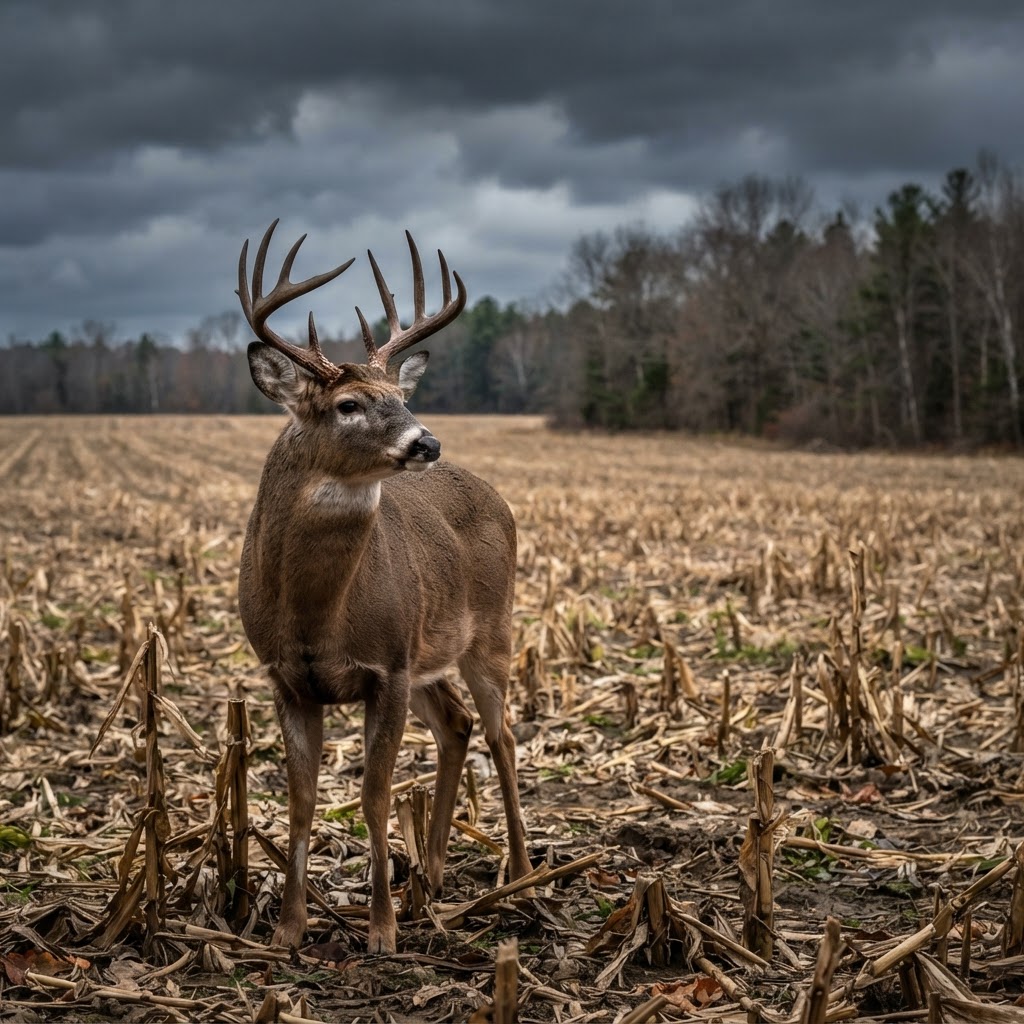
Decoding the Barometer: Science vs. Folklore
For generations, deer hunters have lived and died by the reading on their barometers. The prevailing wisdom suggests that a falling barometer signals an incoming front, forcing deer to feed aggressively before the weather turns. Conversely, many believe high pressure is a 'dead' time to be in the woods. But when we strip away the anecdote and look at peer-reviewed GPS-collar telemetry studies, the reality is far more nuanced. At Buckeye Hunter Hub, we believe that understanding is the most effective tool in your kit for consistently tagging mature whitetails.
Free hunting map, zones & 50-state resources
Save your spots, share zones with your group, and get deer & waterfowl movement forecasts — free.
The Physics of Pressure
Barometric pressure is the measurement of the weight of the atmosphere pushing down on the earth. When pressure drops, it typically indicates the arrival of low-pressure systems, which often bring clouds, precipitation, and temperature shifts. When pressure rises, it usually signifies fair weather and clear skies.
Deer are highly attuned to their environment. Some researchers theorize that a significant drop in pressure changes the way scent molecules travel and how sound waves propagate, potentially impacting a deer's ability to detect predators. However, from a strictly biological standpoint, it is rarely the pressure itself that dictates movement. Instead, it is the secondary environmental factors—temperature, humidity, and cloud cover—that trigger a response.
Why Weather Fronts Matter More Than Numbers
The reason hunters swear by a falling barometer is that it almost always precedes a cold front. In the Midwest and across the US, a dropping barometer during the October or November lull is often the catalyst for a sudden increase in daylight activity.
Telemetry data consistently shows that deer movement peaks when temperature gradients shift significantly. As a cold front approaches, temperatures drop, and the oxygen density of the air increases. For a ruminant animal, this change in thermoregulation can be a strong motivator to rise and feed. The deer isn't checking the barometer; they are reacting to the physiological comfort of cooler air. If you want to see how these localized conditions impact your specific region, our tracks these variables to help you prioritize your time in the stand.
Challenging the Myths: Moon Phase and Other Noise
One of the most persistent myths in the hunting community is the 'Moon Phase Theory.' While the lunar cycle has a documented impact on ocean tides, study after study on whitetail GPS-collared subjects has shown that moon phase is, at best, a secondary or tertiary factor in deer movement. When compared to the immediate impact of a sharp temperature drop or a photoperiod-driven rut phase, the moon is a whisper in a hurricane.
E-Tag States

Harvest Tags
E-check means you supply the tag. Printed with the exact fields your state requires.
3-pack $22.95
Focusing on the moon is a classic case of 'hunting the calendar' rather than hunting the conditions. Instead of obsessing over the lunar phase, you are better off keeping an eye on to understand where we are in the herd's biological cycle, such as the pre-rut or peak scrape-building phase.
Tactical Thresholds for the Modern Hunter
So, what should you look for? Here are the data-driven thresholds that suggest a high-probability hunt:
Raise a safe, confident young hunter.
Guide your kids ages 5–17 through interactive hunting safety missions, real decision drills, and earned trophies — all from one free parent account.




- The 24-Hour Temperature Swing: A rapid drop in temperature (15+ degrees within 24 hours) consistently correlates with higher daytime movement, regardless of the absolute barometric number.
- Stable High Pressure Post-Front: Once a front passes and the barometer rises and stabilizes in the 30.00+ range with clear skies, movement often slows down significantly. Mature bucks tend to hunker down in thick cover to wait out the bright, high-pressure conditions.
- The 'Transition' Window: The best hunting is often found in the 6-12 hour window immediately preceding a storm system. This is when the pressure is at its steepest descent.
Final Thoughts: Hunting the Environment
While barometric pressure is a useful data point, it should be treated as one piece of a much larger puzzle. Deer movement is an evolutionary response to survival. They move when they need to eat, when they are driven by the search for mates, and when they feel secure enough to traverse open terrain.
Don't let a 'suboptimal' barometer keep you home. If the temperature is right, the wind is in your favor, and the suggest a high-traffic travel corridor, get in the stand. Use the barometer as an indicator of when a change in weather is coming, but rely on your knowledge of the land and the herd’s behavior to dictate where you should be sitting.
Join 322 hunters and anglers on Buckeye Hunter Hub — free.
Latest from the Community

Posted
Rifle Slings and Leather Goods
Richard Taggart · 1h ago
Fort Sill Oklahoma On post hunting Rules and bag limits
Posted
Fort Sill Oklahoma On post hunting Rules and bag limits
Keith Bennett · 9h ago
scouting
Posted
scouting
Josh · 11h ago

Posted
Trail Cam Talk!
Jeff Cote · 22h ago

Trail Cam
Whitetail Deer
Jeff Cote · 22h ago
Pressure Check!
Posted
Pressure Check!
Jeff Cote · 23h ago
New drop
Fresh Buckeye Hunter Hub tees & hoodies


Everything you need to hunt smarter — free
Buckeye Hunter Hub is a free, nationwide platform. Create an account and unlock the full toolkit:
Free Interactive Hunting Map
Mark stands, cameras, and sign. Draw hunting zones with public land & county overlays across all 50 states.
Zones with Group Sharing
Share zones with your hunting group, split property into sections, assign stands, and check in — all in one place.
50 States of Hunting Resources
Season dates, license links, and DNR regulations for every state, kept current so you never miss an opener.
Deer Movement Forecast
Data-driven daily movement predictions using wind, moon, and pressure — know when to sit before you go.
Waterfowl Movement & Tools
Flight-potential forecasts, migration numbers, decoy spread planner, and a full species field guide.
From the Maker Bench

Taggart Outdoors
Padded Rifle Sling
Hand-built in the USA · $134.99
Shop the MakerNew drop
Fresh Buckeye Hunter Hub tees & hoodies
Shop This

StopBox Pro Ward | Wall-Mounted
$179.00$199.99

StopBox Pro Compact
$159.00$179.99

Buckeye Hunter Hub Tee — Riding Shotgun
$20.55

Buckeye Hunter Hub Hoodie — Riding Shotgun
$32.87
E-Tag States
Harvest Tags
E-check means you supply the tag. Printed with the exact fields your state requires.
3-pack $22.95
More Articles
How to Master Evening Thermals for Deer Hunting
Learn how evening thermals flow like water to better position your stand. Use these expert tips to stop getting winded by deer.
Field Hunting Canada Geese: Spreads, Motion, and Concealment
Master the art of the dry field hunt by leveraging barometric pressure and wind dynamics to put massive flocks of Canada geese at your fingertips.

Unveiling the Buckeye Hunter Hub Tee: A New Look for the Field and Beyond
Meet the Buckeye Hunter Hub Tee — Two Kinds of Camo Shield, the ultimate outdoor apparel designed for those who live life between the woods and the water.

Represent the Woods and the Country: Introducing the New Buckeye Hunter Hub Tee
Meet our new 'Two Kinds of Camo' tee—designed for those who live for the woods and respect the flag. It's the perfect addition to your outdoor apparel collection.