Channel Catfish
Ictalurus punctatus
The ultimate opportunistic scavenger, the Channel Catfish offers anglers of all skill levels a powerful fight and a delicious reward.
Typical Size
2 to 10 pounds is standard, with trophy specimens exceeding 20 pounds.
Prime Seasons
Late spring through early autumn; they are most active when water temperatures exceed 70 degrees Fahrenheit.
Overview
Channel Catfish are the most widespread North American catfish species, renowned for their incredible sense of smell and taste which allows them to hunt in turbid or pitch-black water. They are highly adaptable, thriving in diverse environments ranging from small farm ponds to massive, slow-moving river systems. Anglers prize them not only for their aggressive nature—often striking lures as hard as any gamefish—but also for their reputation as excellent table fare.
Targeting Channel Catfish is a favorite pastime because they provide reliable action during the summer months when other species may become lethargic. Whether you are fishing from a bank with a simple bait rig or targeting trophy-sized individuals in deep river channels with specialized electronics, the 'Channel Cat' rewards patient anglers with persistent, drag-screaming runs.
Identification
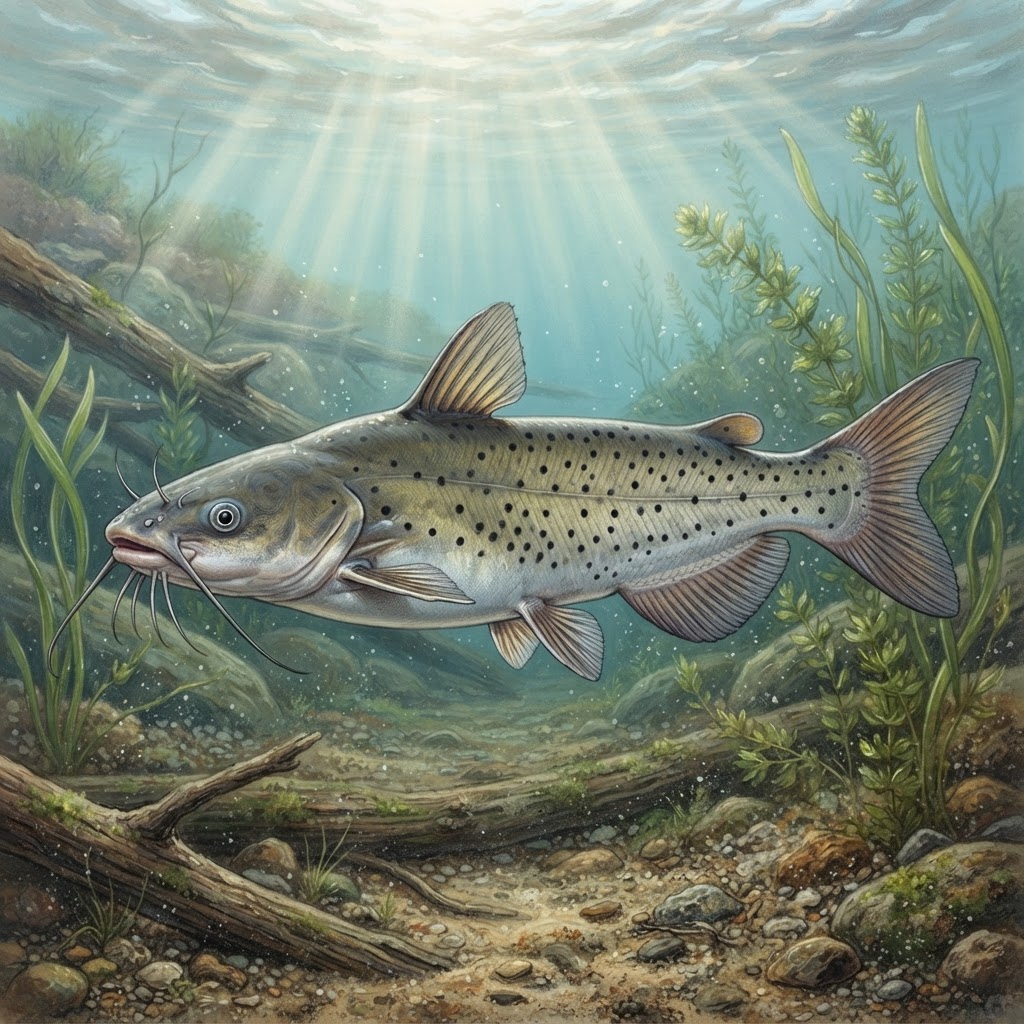
- Deeply forked tail fin
- Small black spots scattered across their silvery-olive sides
- Eight barbels around the mouth (whiskers)
- Adipose fin present between the dorsal and caudal fins
- Rounded anal fin with 24 to 29 rays
Habitat
Diet & Forage
Behavior & Feeding
Channel catfish are opportunistic omnivores that rely heavily on their acute sense of smell and barbels to locate prey in low-visibility water. While they are active throughout the day, they exhibit a strong nocturnal feeding preference, often moving from deep-water holes into shallow flats or current breaks during low-light periods. Their aggression increases during the warmer months as their metabolism spikes, leading to active chasing of baitfish, crayfish, and insects. In the winter, they tend to move to deeper, more stable water and become sluggish, requiring slower presentations directly in front of the fish.
Spawning
Spawning typically occurs in late spring or early summer when water temperatures consistently reach the 75°F to 80°F range. Males select secluded, dark nesting sites like hollow logs, rocky crevices, or undercut banks, where they aggressively guard the eggs and fry. During this window, fishing can be challenging as the males are preoccupied with parental duties rather than hunting for food. Anglers often find the best success by targeting the pre-spawn staging areas just before the fish move into their nest sites.
Water Temperature
Weather Triggers
Approaching low-pressure front
Often triggers a feeding frenzy; fish sense the pressure drop and will actively hunt.
Heavy rainfall/runoff
Increases turbidity and pushes nutrients into the system; fish aggregate near inlets.
Stable, overcast skies
Reduces light penetration, keeping fish active and roaming shallower areas longer during the day.
Depth by Season
Best Lure Rigs & Setups
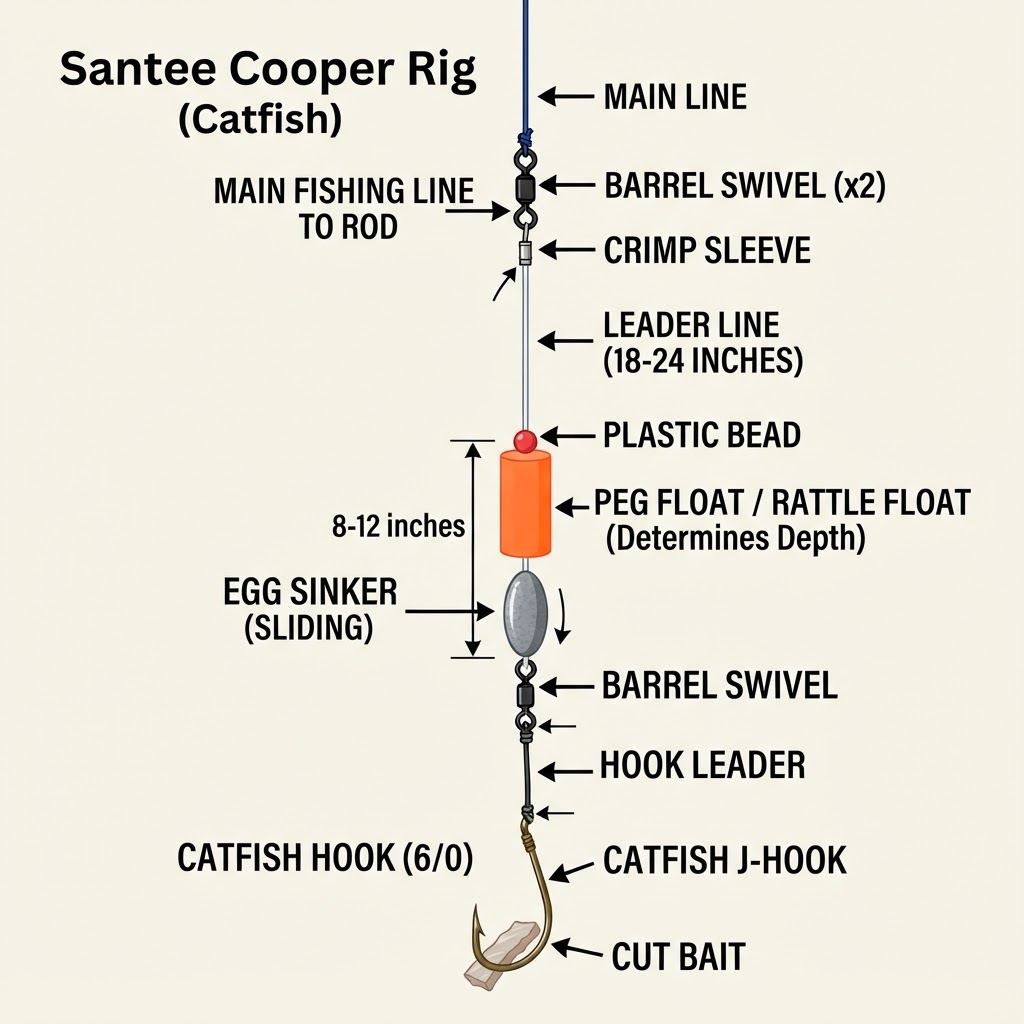
Santee Cooper Rig
When: When fishing current where you want the bait slightly elevated off the bottom.
Setup: 1-2 oz egg sinker, swivel, 12-18 inch mono leader, a small float added to the leader near the hook, and a 4/0-6/0 circle hook.
Slip Sinker Rig
When: The standard go-to rig for still water and slow-moving rivers.
Setup: 1 oz sliding egg sinker, plastic bead to protect the knot, barrel swivel, 24 inch leader, and a 2/0 to 5/0 octopus or circle hook.
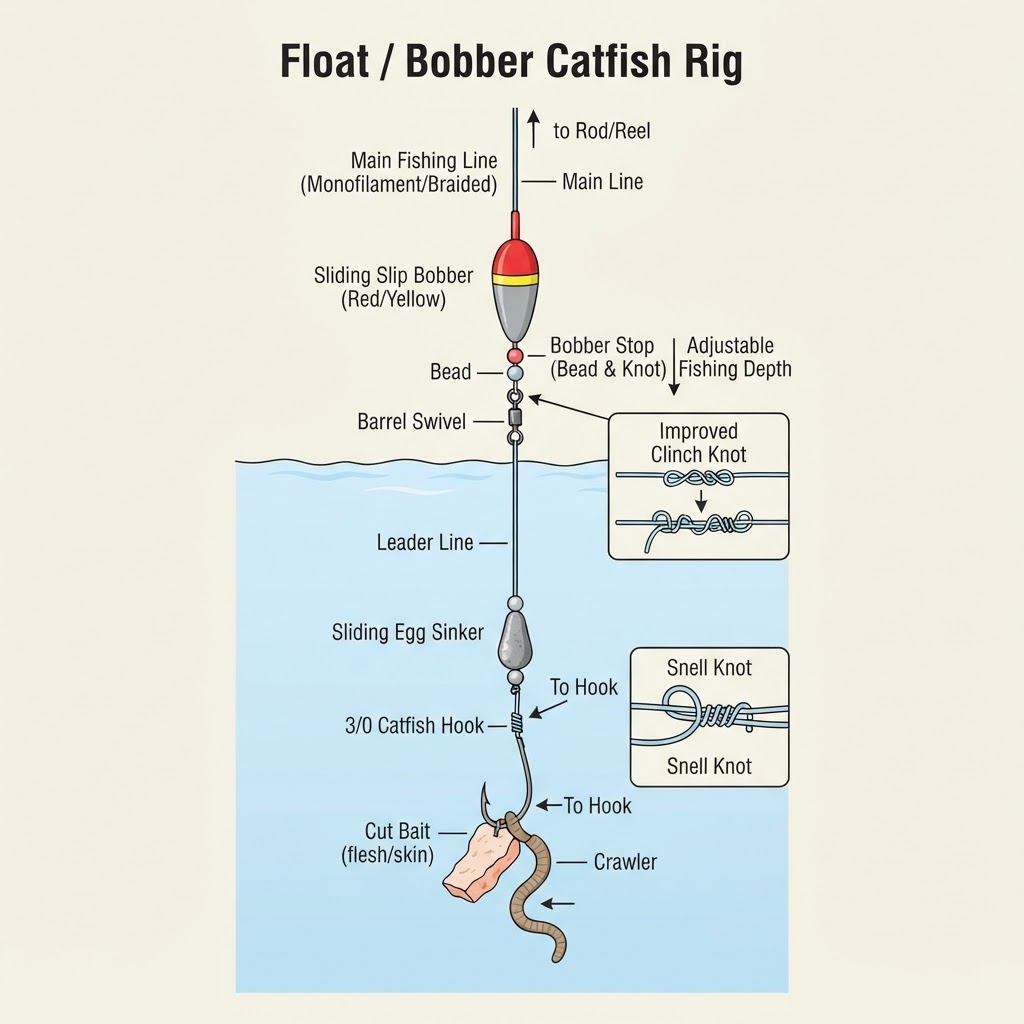
Float Rig
When: When targeting fish hovering above snaggy structure or weed tops.
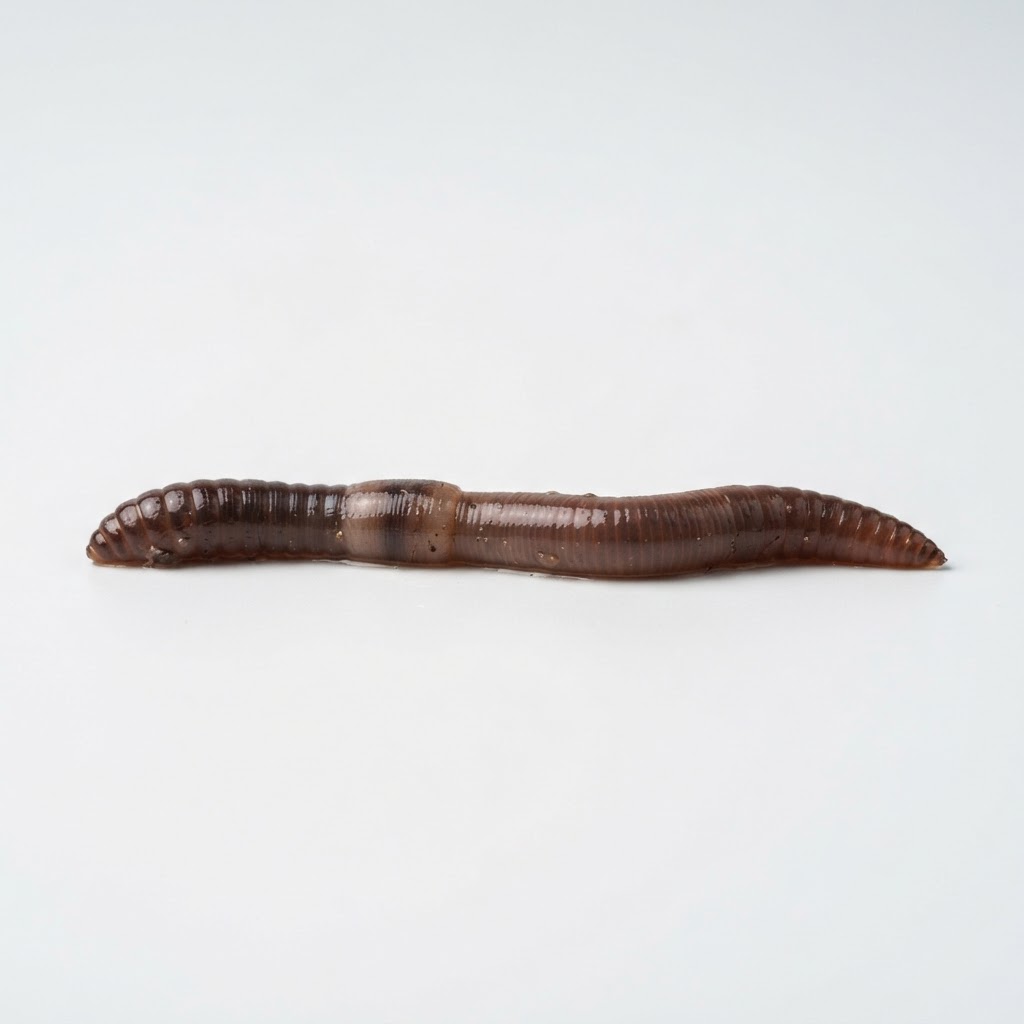
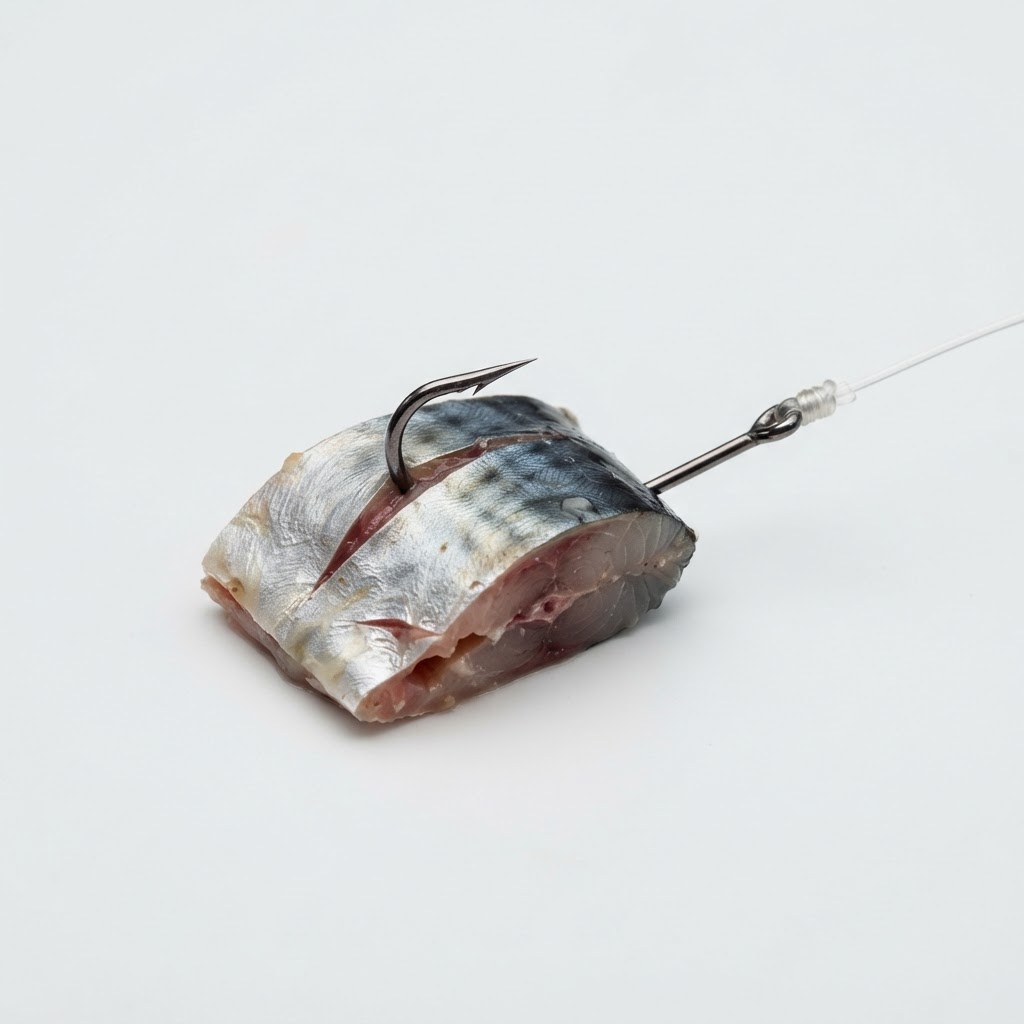
Setup: Large slip bobber, 3/8 oz split shot for ballast, and a 1/0 circle hook tipped with cut bait.
Best Knots
Lures That Catch Channel Catfish
Rigs From The Library For Channel Catfish
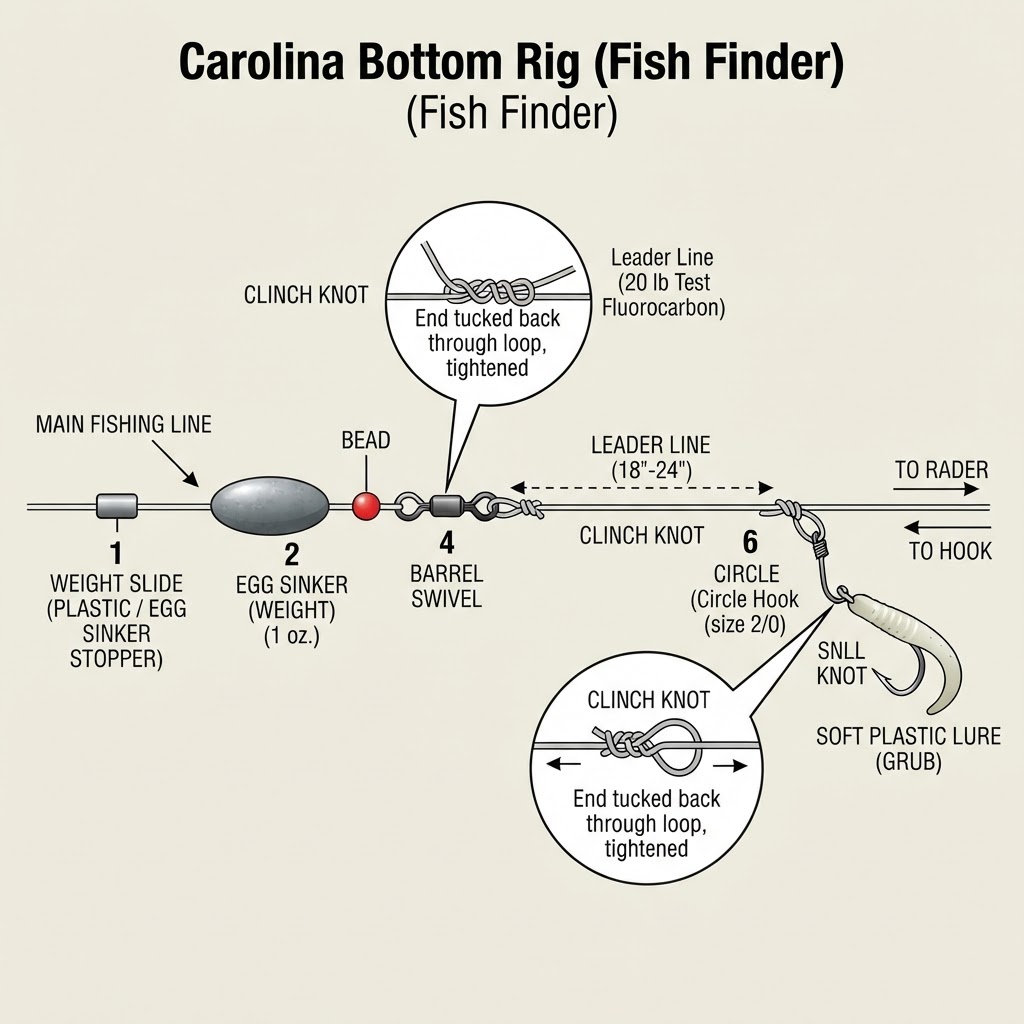 5-60 ft
Carolina Bottom Rig (Fish Finder)
The ultimate bottom-hugging presentation that allows fish to pick up your bait without feeling the resistance of your heavy sinker.
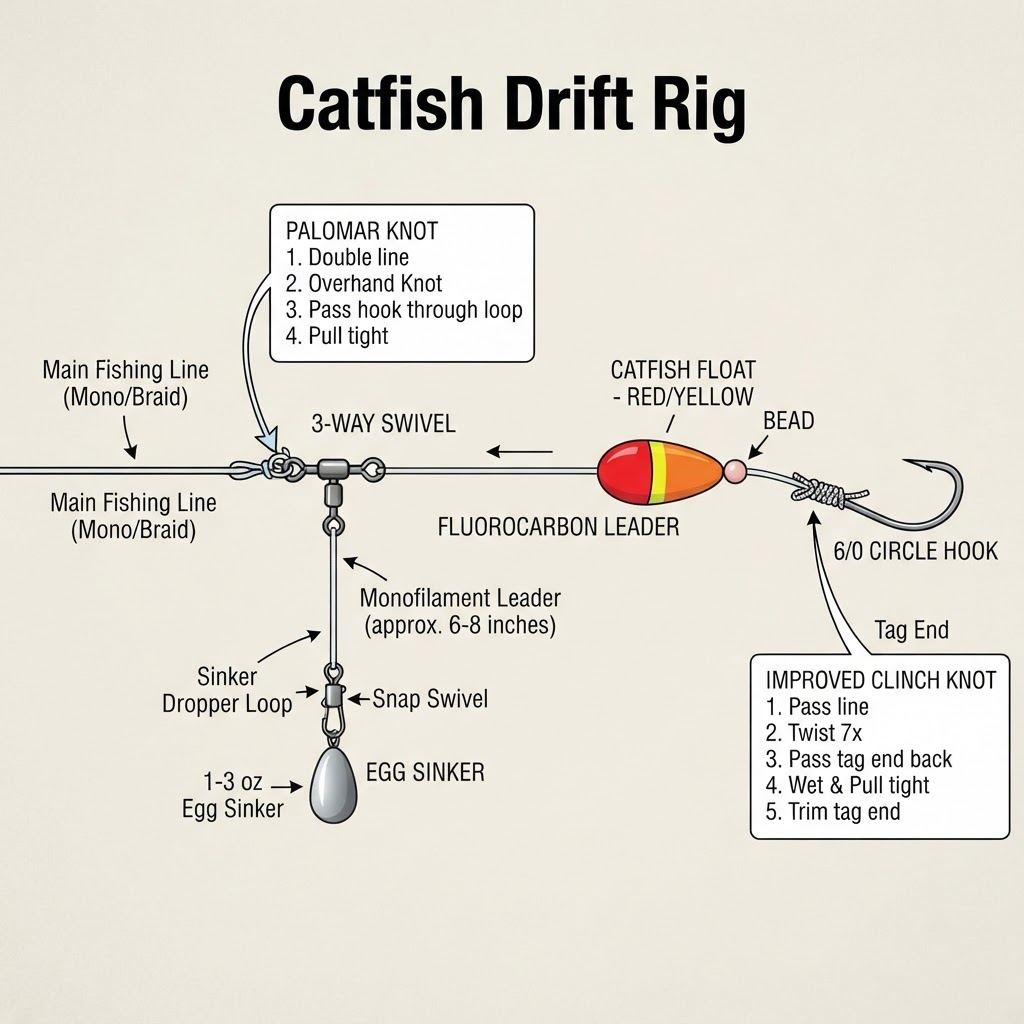 5-40 ft
Catfish Drift Rig
The ultimate bottom-hugging presentation designed to keep your bait hovering just above the riverbed where monster catfish feed.
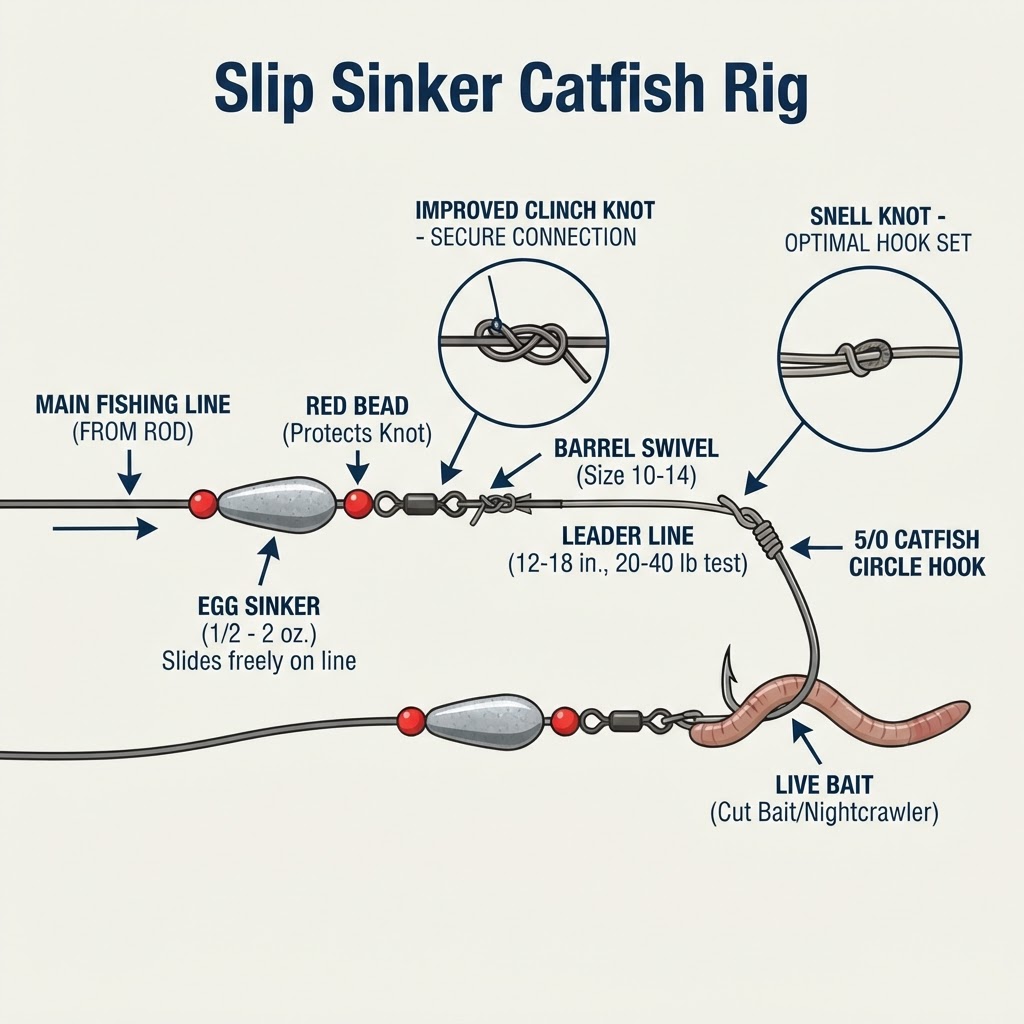 5-50 ft
Slip Sinker Catfish Rig
The ultimate bottom-fishing setup that lets bait move naturally while keeping fish from feeling any resistance upon the pick-up.
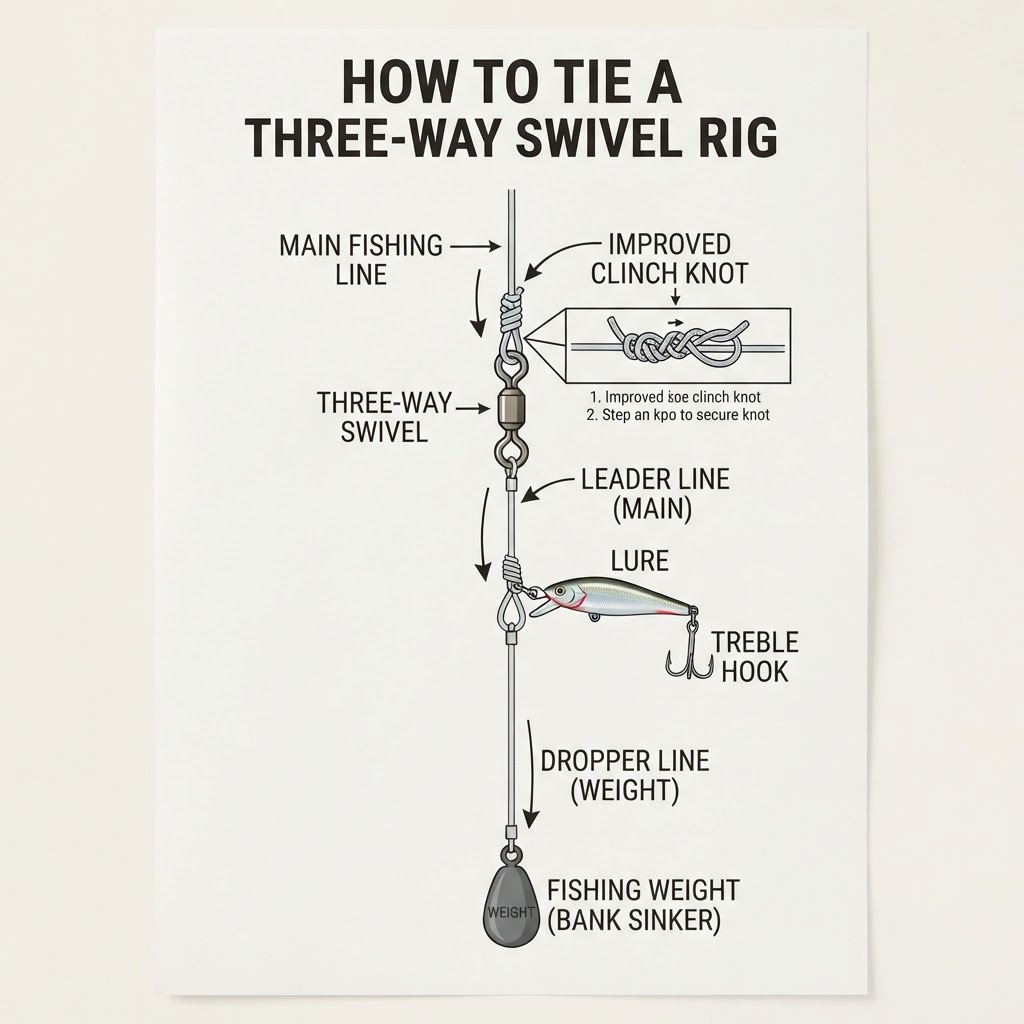 10-60 ft
Three-Way Swivel Rig
The ultimate bottom-tracking rig that keeps your bait suspended perfectly in the strike zone regardless of current or depth.
 10-40 ft
Santee Cooper Rig (Catfish)
The ultimate bottom-bouncing setup for trophy catfish, combining a controlled drift with a buoyant lure presentation that keeps your bait suspended right in the strike zone.
 1-10 ft
Float / Bobber Catfish Rig
Suspends your bait in the strike zone, keeping it perfectly positioned above debris and bottom structure where catfish hunt.
Catch more channel catfish — free
Create a free account and unlock the full angling toolkit:
Latest from the Community