Sauger
Sander canadensis
The elusive, river-dwelling cousin of the walleye that thrives in low-light and murky current.
Typical Size
12-18 inches, 1-3 pounds; trophy class exceeds 4 pounds.
Prime Seasons
Late fall (October-November) and early spring (March-April).
Overview
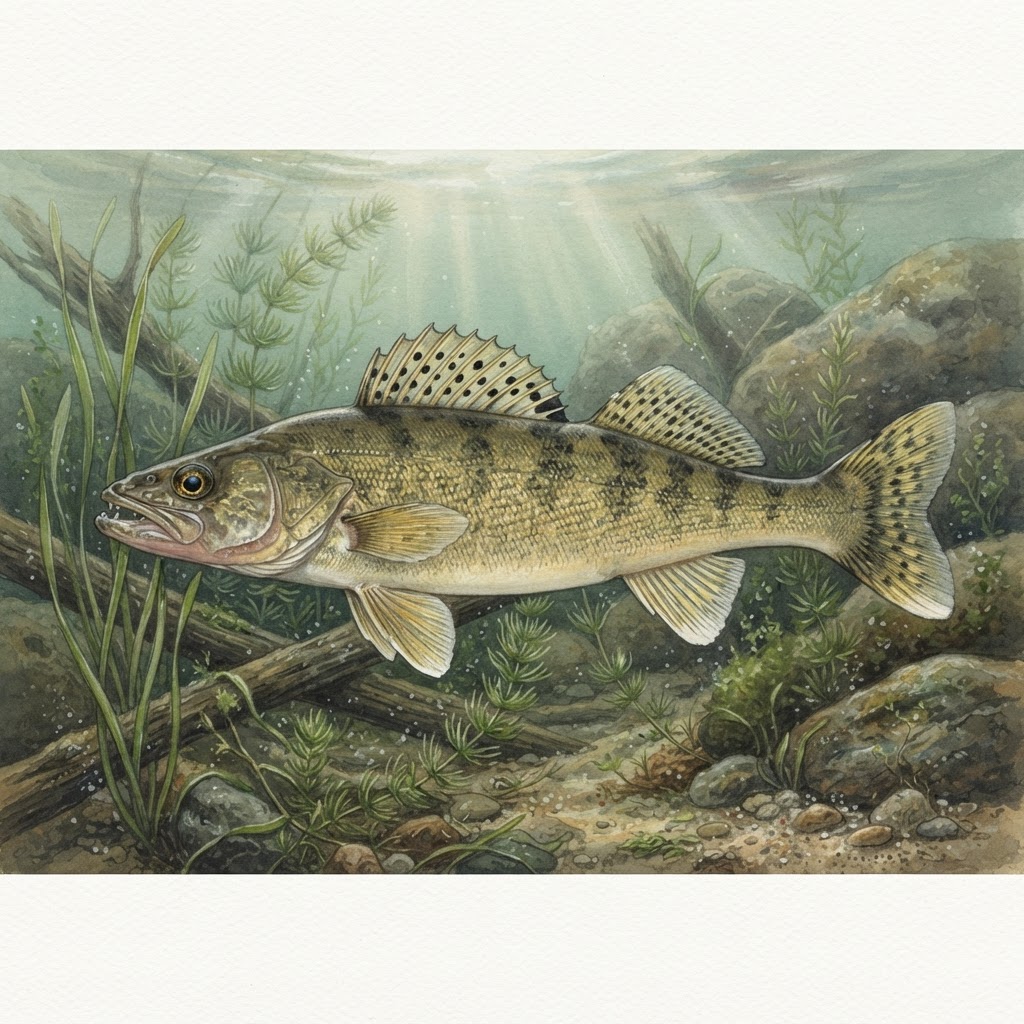
The sauger is a highly prized game fish in major North American river systems, known for its ability to thrive in turbid, high-flow environments where other predators struggle. Unlike the walleye, the sauger lacks the white tip on the lower tail fin and features distinct, blotchy markings along its flanks, making it a master of camouflage in stained water.
Anglers target sauger during their aggressive pre-spawn runs and late-fall feeding frenzies. They are highly structure-oriented, often congregating in massive schools behind current breaks, wing dams, and deep scour holes. Their tendency to feed on the bottom makes them a favorite challenge for vertical jigging enthusiasts who enjoy the 'thump' of a sauger strike.
Identification
- Lack of white tip on the bottom of the tail fin
- Distinct black blotches and mottling on the sides
- Small black spots on the dorsal fin membranes
- Rough, ctenoid scales feeling like sandpaper
- Large, reflective tapetum lucidum eyes for low-light hunting
Habitat
Diet & Forage
Behavior & Feeding
Sauger are highly light-sensitive ambush predators that often congregate in deep holes or near current breaks during the day, becoming more active feeders during low-light periods. They frequently exhibit a roaming behavior in search of baitfish schools, often suspending just off the bottom in murky, flowing water. Their aggression levels fluctuate with water clarity, as they rely heavily on their specialized tapetum lucidum to hunt in stained conditions where they can easily outcompete walleye. Throughout the year, they undertake significant migrations, moving upstream into tailraces in the winter and spring before shifting to main lake basins or deep river pools during the summer.
Spawning
Spawning typically occurs in early spring, often triggered by the onset of ice-out and increasing day length. They target rocky substrates, gravel bars, or rip-rap areas in rivers with moderate current to broadcast their eggs. This period is notoriously difficult for anglers, as sauger become preoccupied with reproductive duties and often move away from traditional feeding zones. Once the spawn concludes, fish frequently seek out immediate deep-water drop-offs to recover, which can lead to rapid, high-volume fishing opportunities.
Water Temperature
Weather Triggers
Overcast Skies
Eliminates the light sensitivity barrier, allowing sauger to feed aggressively in shallower depths throughout the day.
Falling Barometer
Often triggers a 'feeding frenzy' phase; utilize larger baits and more erratic jigging motions to capitalize on increased activity.
Cold Front
Forces fish into a lethargic state; slow your presentation significantly and downsize to smaller plastics or live bait.
Increased Current
Pushes fish toward specific current breaks; concentrate efforts directly behind boulders or bridge pilings.
Depth by Season
Best Lure Rigs & Setups
Vertical Jig
When: Primary technique for river fishing around structure.
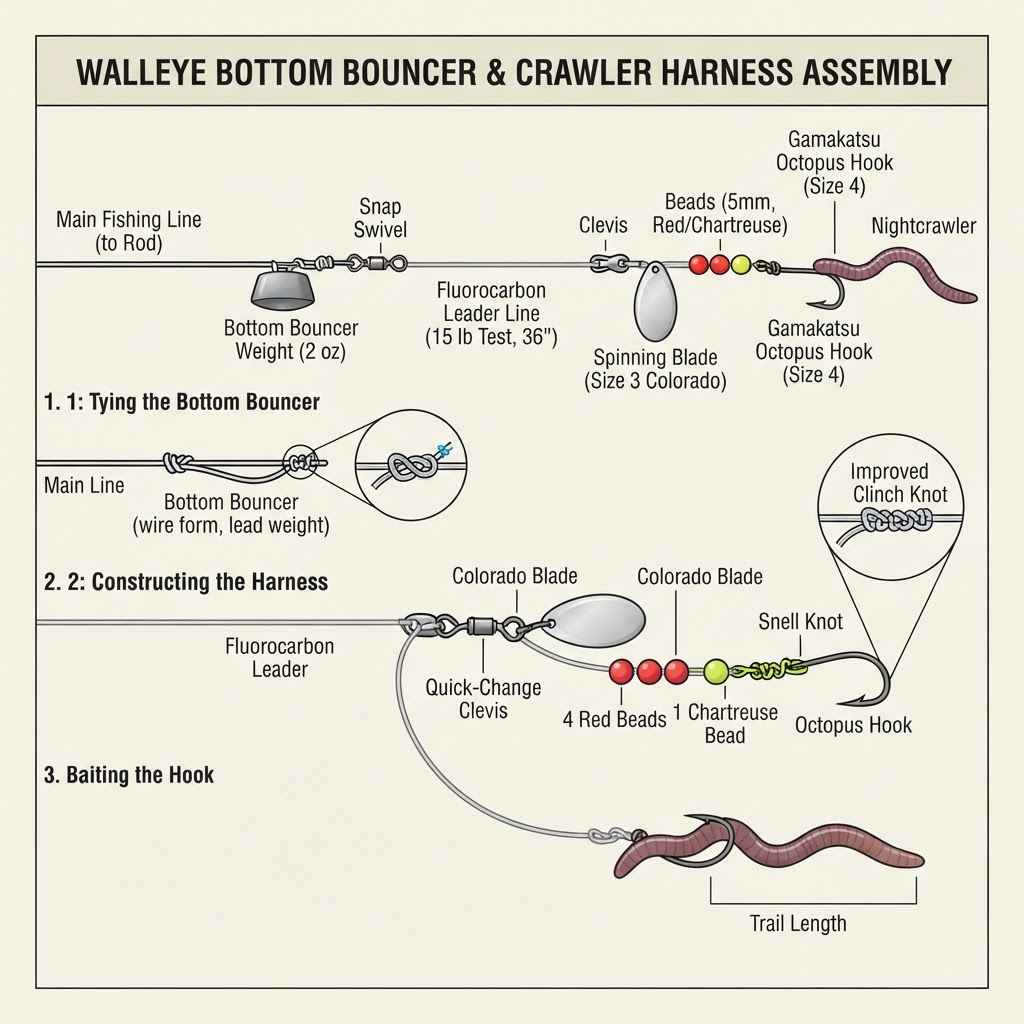
Setup: 1/4 to 3/8 oz lead head jig tipped with a 3-inch curly tail grub or live fathead minnow on 8lb fluorocarbon.
Three-Way Rig
When: Used to keep bait in the strike zone in heavy current.
Setup: Three-way swivel, 18-inch dropper line to a bank sinker (1-3 oz), and 3-foot leader to a floating jig head.
Drop Shot
When: Targeting inactive sauger in deep, rocky scour holes.
Setup: 1/0 offset hook, 1/4 oz cylinder weight, 3-inch finesse shad plastic on 6lb test braid with fluorocarbon leader.
Best Knots
Rigs From The Library For Sauger
Catch more sauger — free
Create a free account and unlock the full angling toolkit:
Latest from the Community

Trail Cam
Whitetail doe
Admin Josh · 3d ago

Posted
Ready For My Extended Archery Deer Hunt
Richard Taggart · 3d ago

Trail Cam
Untitled
Jagger Feazel · 3d ago

Posted
Venison Burgers
Richard Taggart · 4d ago

Trophy
Throwback to 2010
Jeffrey Cote · 4d ago

Posted
Last Day of the Archery Elk Hunt
Richard Taggart · 5d ago