
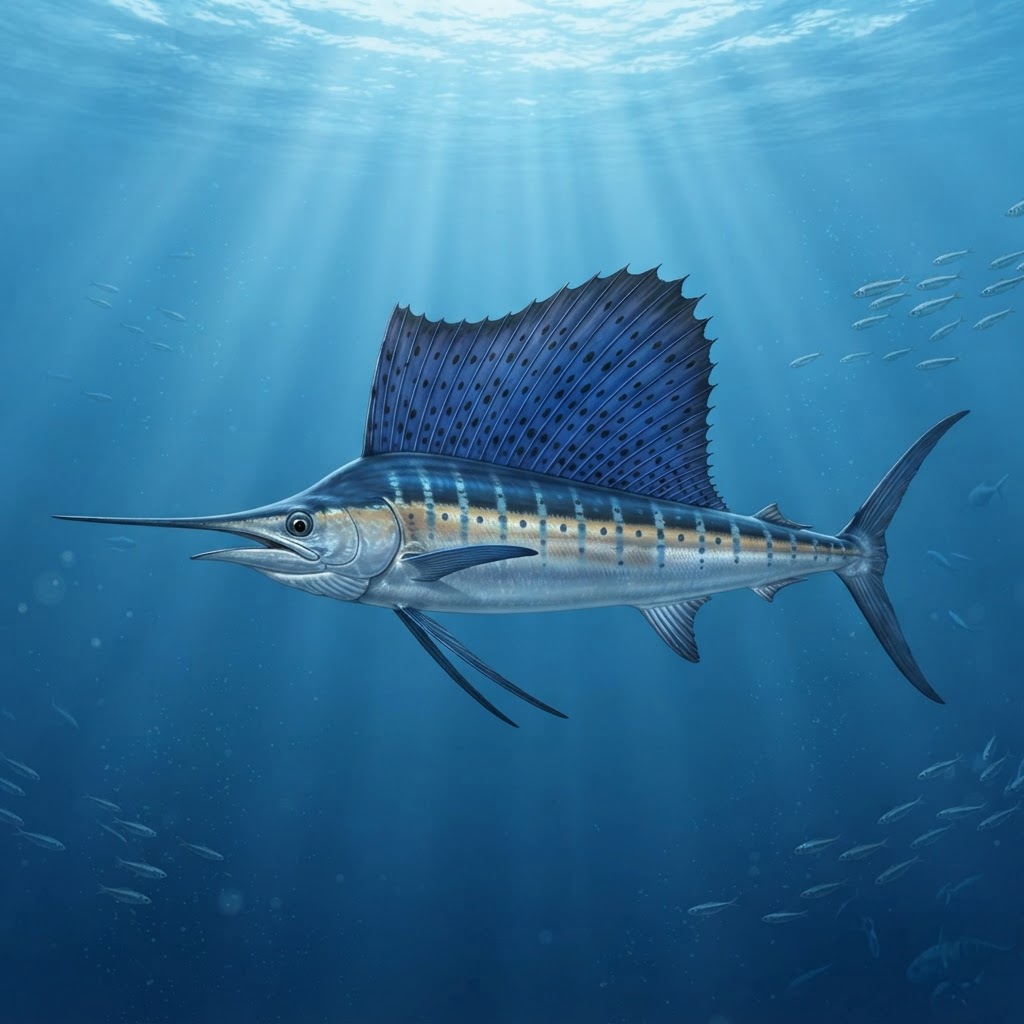
Sailfish
Istiophorus platypterus
The ultimate speedster of the ocean, the sailfish is a crown jewel for light-tackle saltwater anglers seeking blistering runs and spectacular aerial acrobatics.
Typical Size
6 to 8 feet in length and 30 to 90 pounds, though some specimens can exceed 100 pounds.
Prime Seasons
Year-round in tropical climates, but peak migration periods are typically late fall through spring in the Atlantic, specifically along the Florida coast.
Overview
The Atlantic sailfish is one of the fastest fish in the ocean, capable of explosive bursts of speed that test the limits of both angler and equipment. Renowned for their majestic, oversized dorsal fin and long, pointed bill, these predators hunt in packs and are known for their spectacular jumping behavior once hooked, making them a favorite trophy for sport fishermen.
Anglers target sailfish primarily for the excitement of the chase and the visual nature of the bite. Whether kite-fishing in Florida waters or trolling offshore, the sailfish provides a challenging fight that requires patience, precise boat handling, and a high-energy engagement that keeps even the most experienced saltwater enthusiasts coming back for more.
Identification
- Massive, sail-like dorsal fin running nearly the entire length of the back
- Long, thin bill or rostrum used to slash at bait schools
- Deep indigo to slate blue upper body fading to a silvery-white underbelly
- Prominent lateral line and thin, streamlined body shape for extreme speed
- V-shaped tail (caudal fin) designed for propulsion
Habitat
Diet & Forage
Depth by Season
Best Lure Rigs & Setups
Live Bait Kite Rig
When: The gold standard for calm to moderate wind days to keep baits dancing on the surface.
Setup: 20-30 lb monofilament main line, 40-50 lb fluorocarbon leader, 4/0 to 6/0 circle hook, live goggle-eye or threadfin.
Flat Line Trolling Rig
When: When covering large areas of water to locate roaming schools of sailfish.
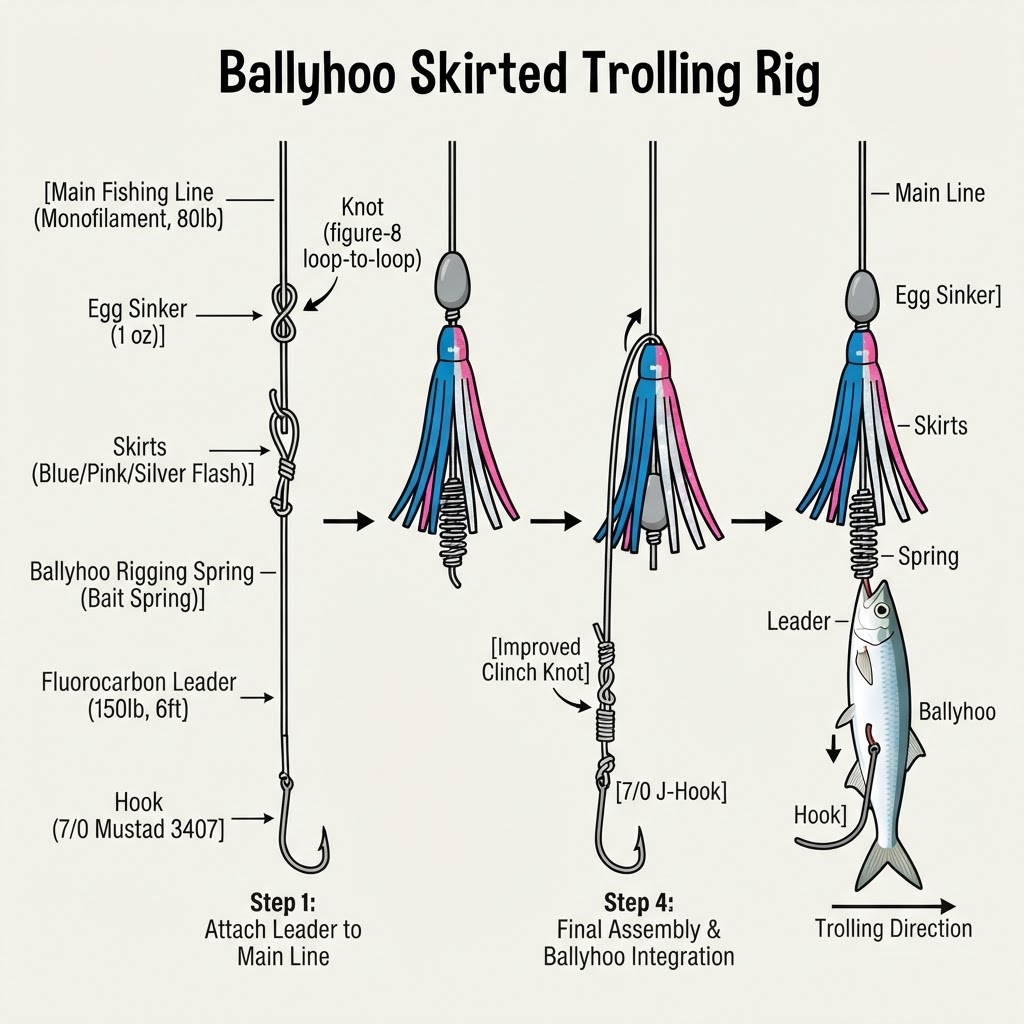
Setup: 30 lb class conventional reel, 50 lb mono leader, 7/0 circle hook, rigged ballyhoo with a skirt.
Light Tackle Fly Rig
When: For specialized anglers looking for the ultimate challenge using large billfish streamers.
Setup: 12-14 weight fly rod, intermediate or floating line, 60 lb shock tippet, oversized colorful popper or flat-head streamer.
Best Knots
Catch more sailfish — free
Create a free account and unlock the full angling toolkit:
Ready to target sailfish?
Mark your spots on the fishing map and plan around the bite.
Latest from the Community


