
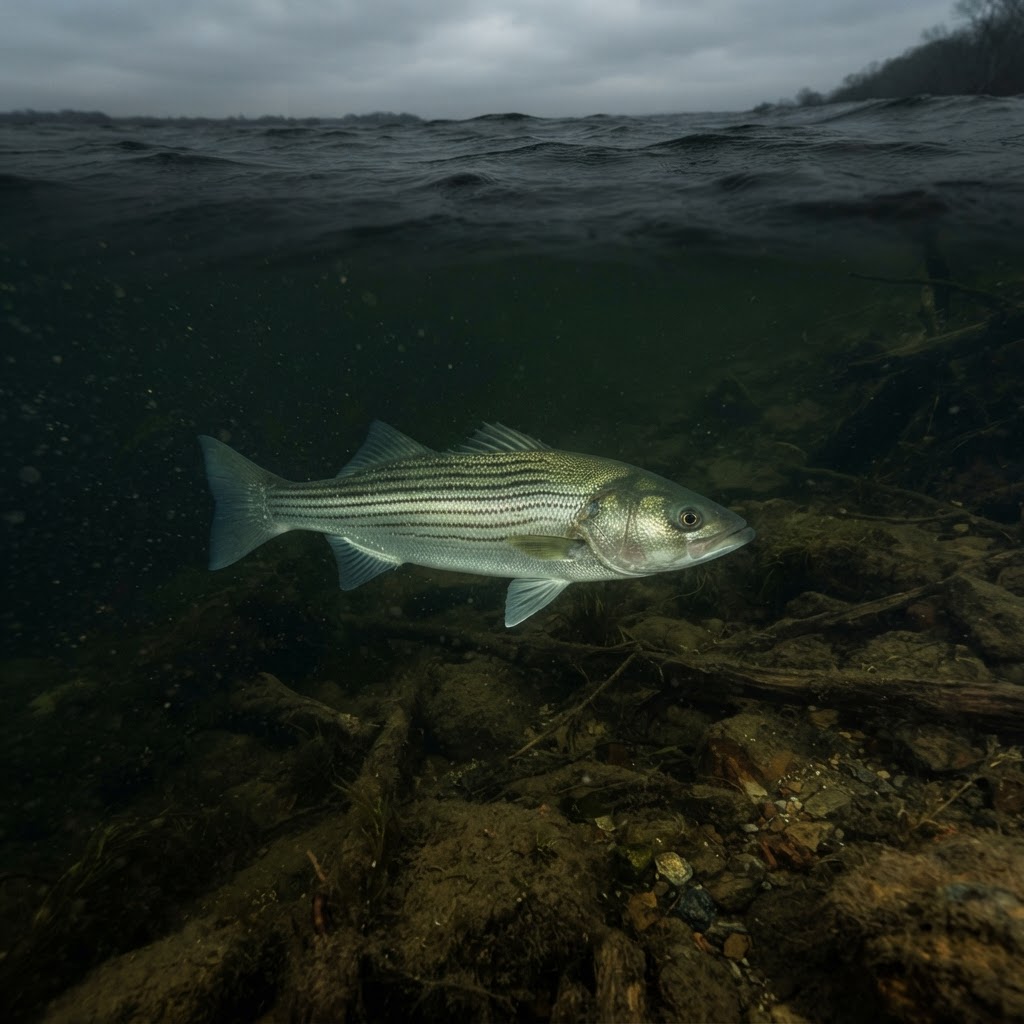
Where Do Striped Bass Go In Winter: Locating Migratory Schools
Where Do Striped Bass Go In Winter
As of late November, the vast majority of migratory striped bass have departed the coastal waters of New England and the Mid-Atlantic, heading toward their wintering grounds. The migratory population primarily winters in the open Atlantic, specifically in federal waters off the coasts of Virginia and North Carolina. Tagging data confirms that these schools are a mix of fish from various spawning stocks, including the Chesapeake Bay, the Hudson River, and the Delaware River. While these large migrators are often found 25 to 30 miles offshore in water temperatures ranging from 48°F to 55°F, they are largely inaccessible to the average shore-based angler.
Get in the Community feed
Hunters and anglers nationwide posting bucks, catches, trail cam pics and what's working right now.


For those fishing closer to home, the focus shifts to resident populations and "holdovers." These fish do not participate in the long-distance ocean migration. Instead, they seek out thermal stability in deep river channels, dredged coves, and tidal estuaries. If you are planning a trip, check the before you head out, as many jurisdictions implement strict catch-and-release or closed-season rules during the winter months to protect these lethargic fish.
When you are scouting for these fish, remember that the offshore migratory schools are often found in the vicinity of baitfish that are also moving toward warmer waters. Because these fish typically feed in the direction they are swimming, you may find a tactical advantage by trolling in a southward direction. If you are heading out on the open ocean, keep in mind that federal waters are closed to this fishery, so you must remain within the three-mile limit from shore.
Chesapeake Bay and Mid-Atlantic Wintering Patterns
In the Chesapeake Bay, when surface temperatures dip into the 40s, striped bass retreat to the deepest available channels, often holding at depths of 60 feet or more. By late January, these fish become extremely inactive and frequently ignore traditional lures. Anglers who target these fish often rely on specialized sonar to locate schools hunkered down near the bottom.

Youth Hunter Academy
Raise a safe, confident young hunter.
Safety missions for ages 5–17. Free parent account.
One notable exception to the deep-water rule is the presence of warm-water discharges. Power plants, such as the Calvert Cliffs facility in Maryland, create artificial thermal refuges that attract striped bass throughout the winter. These areas can provide consistent action, but the fishery is entirely dependent on the plant's operation. If the plant shuts down, the rapid drop in water temperature can cause cold shock to the fish, effectively ending the bite. Always verify local data to see if these specific areas are currently productive.
Beyond the deep channels, look for fish near bridge structures and oyster beds. In the Severn River, for example, cruising along the backside of bridge pilings at a slow trolling speed often reveals marks on your fishfinder. Once you spot them, pull the throttle back and drop your line to the depth of the marks. This technique is effective across many Chesapeake tributaries, provided you are scanning the structure thoroughly and adjusting your depth to match the fish you see on your electronics.
Hudson River and New England Tidal Rivers
In the Hudson River, striped bass move downriver toward saltier water as the weather cools. Historically, the stretch between Yonkers and the Battery in New York City has held the highest concentrations of wintering fish. These bass typically arrive by January and remain until the spring spawning migration begins in March or April.
In New England, the strategy changes to finding holdovers in tidal rivers. Rivers like the Connecticut, the Thames, and the Housatonic are known to harbor resident stripers that spend the winter in deep, dredged coves. In some cases, these coves can freeze over, leading to unique ice-fishing opportunities. However, many states have moved to protect these populations. For instance, Connecticut biologists have noted a decline in the once-famous winter fishery in the Thames River, and anglers should consult the to understand which rivers are currently open and which are protected.
In Connecticut, be aware that Public Act 26-101 mandates that all striped bass fishing must be catch-and-release from December 1 through March 31. Violating these rules can result in fines starting at 150 dollars. While the Thames River remains a notable location, the winter fishery there has changed significantly over the last two decades. Always verify the current status of these rivers through the state wildlife agency website before planning your trip, as regulations are subject to change based on annual population assessments and conservation needs.
West Coast Striped Bass Movement
On the West Coast, particularly in the San Francisco Bay and the Sacramento-San Joaquin Delta, striped bass behavior is dictated by water temperature and spawning cycles rather than a long-distance ocean migration. During the winter, these fish are widely dispersed throughout the Delta and the Bay. Fishing success is generally low during the coldest months because the fish are not feeding actively.
As water temperatures begin to rise in March, the fish start their movement upstream toward freshwater spawning grounds. Anglers in these regions should focus on the transition periods in early spring rather than the dead of winter. If you are using a to scout these areas, look for deep-water holding spots near the mouths of major tributaries where fish congregate before moving upstream.
While the winter months in the San Francisco Bay and the Sacramento-San Joaquin Delta are generally slow, you can still find success by focusing on the transition periods. As the water temperatures begin to rise in March, the fish start their movement upstream toward freshwater spawning grounds. During this time, the bulk of the legal population spreads throughout the Delta and moves as far north as Colusa and Princeton on the Sacramento River. Focus your efforts on these areas as the spring season approaches.
Tactics for Cold-Water Stripers
When targeting winter stripers, your presentation must match the fish's low metabolic rate. Because the water is cold, the fish are not interested in chasing fast-moving lures.
- Slow Down: Use heavy jigs or live bait presented directly in the strike zone. If you are using a to select your gear, prioritize soft plastics that can be worked with a slow, vertical jigging motion.
- Use Sonar: In deep channels, you will rarely find fish by casting blindly. Use your electronics to identify schools holding near the bottom or suspended in deep holes.
- Check Regulations: Many states, including Maryland, have implemented mandatory catch-and-release seasons for the winter months. Ensure you are using the correct gear, such as circle hooks, to minimize harm to the fish.
- Monitor Water Temp: Striped bass are rarely active in water below 40°F. If the water temperature is at the lower end of their tolerance, focus your efforts on the warmest part of the day or near thermal plumes.
For more specific techniques on rigging for deep-water or cold-weather fishing, consult the to ensure your terminal tackle is appropriate for the conditions. Remember that winter fishing is a game of patience. You are not looking for a feeding frenzy; you are looking for a fish that is willing to take a slow, easy meal.
When the water temperature drops into the 40s, your presentation must be extremely slow. If you are using an umbrella rig, consider a compact version like the Flash Mob Jr. to allow for longer casts. When temperatures fall below 45 degrees, switch to singular baits with less action, such as a soft plastic fluke or a hammered spoon. Let the bait sink to the bottom and work it with a slow, vertical motion, as your bites will mostly occur on the fall.
Winter Fishing Safety and Conditions
Winter fishing requires careful attention to weather and tide. Avoid heading out when winds exceed 12 knots, as rough conditions make it difficult to maintain the precise boat control needed for sluggish fish. On warmer, sunny afternoons, target the shallows, as the sun can heat these areas enough to trigger a bite. Fish often move into these shallows during a high tide, so timing your trip to coincide with moving tidal water can significantly increase your chances of finding active, feeding striped bass.
Common questions
Where do striped bass go in the winter?
Migratory striped bass head to deep offshore waters in the Mid-Atlantic, while resident fish move into deep river channels, tidal estuaries, and warm-water discharge areas.
Can you catch striped bass in the winter?
Yes, but it is challenging. You must locate fish in deep water using sonar and use very slow presentations, as the fish are lethargic and feed infrequently.
Are there specific regulations for winter striper fishing?
Yes, many states have specific winter regulations, including catch-and-release only periods or total closures. Always check your state's current wildlife agency website before fishing.
Do striped bass stay in the same river all year?
Some do. These are called resident or holdover bass. They do not migrate to the ocean and instead spend their entire lives in specific river systems or estuaries.
Fishing this season? to save your spots on the fishing map and keep a log of every catch.
Free every morning
Your Daily Briefing
One morning forecast for the spots you actually hunt and fish: deer movement, waterfowl flights, bite times, wind and shooting light.
See what's in itSet up your briefing
Join free, save a spot on the map, then pick what you hunt and fish and when you want your email.
Catch more these fish — free
Create a free account and unlock the full angling toolkit: