
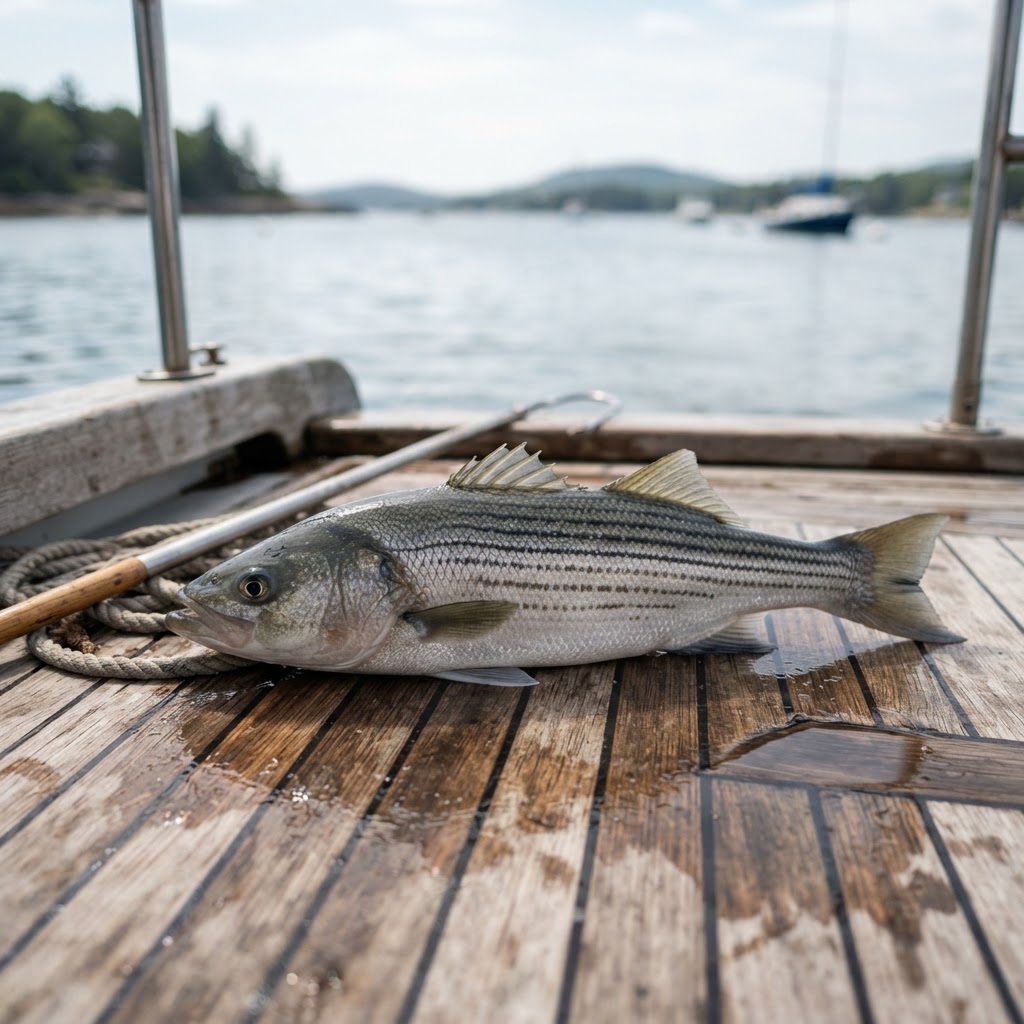
Striped Bass Mastery: Apex Tactics for Coastal and Inland Success
Understanding the Striped Bass: A Force of Nature
The Striped Bass (Morone saxatilis) is perhaps the most iconic predator in North American waters. Whether you are chasing 'cows' in the heavy surf of the Atlantic or tracking trophy hybrids in massive inland impoundments, the Striped Bass is a fish of immense power and endurance. At Buckeye Hunter Hub, we believe that understanding the biology of your quarry is the first step toward consistency. These fish are highly opportunistic predators, characterized by their lateral lines which detect minute vibrations in the water, allowing them to hunt effectively in pitch-black conditions or heavy current.
Get in the Community feed
Hunters and anglers nationwide posting bucks, catches, trail cam pics and what's working right now.


Habitat and Seasonal Migration Patterns
Striped Bass are anadromous, meaning they spend the majority of their lives in saltwater but return to freshwater rivers to spawn. However, populations have been successfully introduced into freshwater systems across the US, creating entirely landlocked 'resident' fisheries. Identifying where these fish hold is often half the battle. In the ocean, they gravitate toward structure like jetties, rocky points, and deep-water drop-offs where tidal flow creates 'highways' for baitfish. For those fishing inland, utilizing a can help you identify deeper river channels and main-lake points that hold bass during the heat of the summer. As water temperatures fluctuate, Striped Bass migrate. In spring, they push into estuaries for the spawn; in summer, they retreat to deeper, cooler thermal refuges; and in the fall, they pack on weight in a feeding frenzy as they migrate south.
The Arsenal: Lures, Baits, and Gear
Equipping yourself for Striped Bass requires versatility. When targeting them in the surf, heavy spinning gear paired with long-casting rods is essential. Popular lures include bucktail jigs, large soft plastic swimbaits, and pencil poppers for explosive topwater action. In freshwater reservoirs, trolling live gizzard shad or using downriggers to reach deep, suspended fish is a highly effective tactic. If you are unsure about current regulations in your target region, always verify them via before heading out. For bait anglers, fresh bunker or herring remains the gold standard, as the oily scent trail is impossible for a hungry striper to ignore.

Youth Hunter Academy
Raise a safe, confident young hunter.
Safety missions for ages 5–17. Free parent account.
Tactical Tips for New Anglers
- Focus on the Tide: Stripers are current-oriented. The two hours before and after a tide change are often when the feed window opens wide.
- Match the Hatch: If the water is filled with peanut bunker or small shad, scale your lure size down. Large plugs are great, but sometimes a subtle presentation outfishes the loud, flashy ones.
- Stealth Matters: Even in murky water, striped bass have a keen sense of their surroundings. Using high-quality fluorocarbon leaders will significantly improve your strike rate.
Advanced Strategies for Experienced Anglers
For the seasoned angler, the challenge is often locating the 'big' fish that break the pattern. This is where provides detailed insight into sonar interpretation and advanced electronics usage. Big Stripers are masters of conservation, holding on the edges of massive bait balls until the perfect moment. Instead of casting blindly, use your electronics to identify the bait schools; where the bait goes, the predators follow. If you are fishing at night, consider using glow-in-the-dark lures or high-contrast topwater baits that create a distinct silhouette against the moonlit surface. The features numerous anglers who have mastered these night-fishing techniques, proving that darkness is often the key to landing your personal best.
Conservation and Ethical Handling
Because striped bass are slow-growing and subject to significant fishing pressure, responsible stewardship is vital. Many state agencies, such as the Atlantic States Marine Fisheries Commission, implement strict slot limits to protect the breeding population. When you land a trophy fish, limit the time it stays out of the water. If you intend to catch and release, use single-hook configurations instead of trebles to minimize tissue damage, and always revive the fish by holding it head-first into the current until it kicks away strongly on its own. By respecting these fish and their environment, we ensure that the legendary power of the Striped Bass continues to challenge anglers for generations to come. Whether you are standing on a rain-slicked jetty or trolling a mountain lake, the pursuit of the striper is the ultimate test of an angler's patience, observation, and skill.
Free every morning
Your Daily Briefing
One morning forecast for the spots you actually hunt and fish: deer movement, waterfowl flights, bite times, wind and shooting light.
See what's in itSet up your briefing
Join free, save a spot on the map, then pick what you hunt and fish and when you want your email.
Catch more these fish — free
Create a free account and unlock the full angling toolkit: