
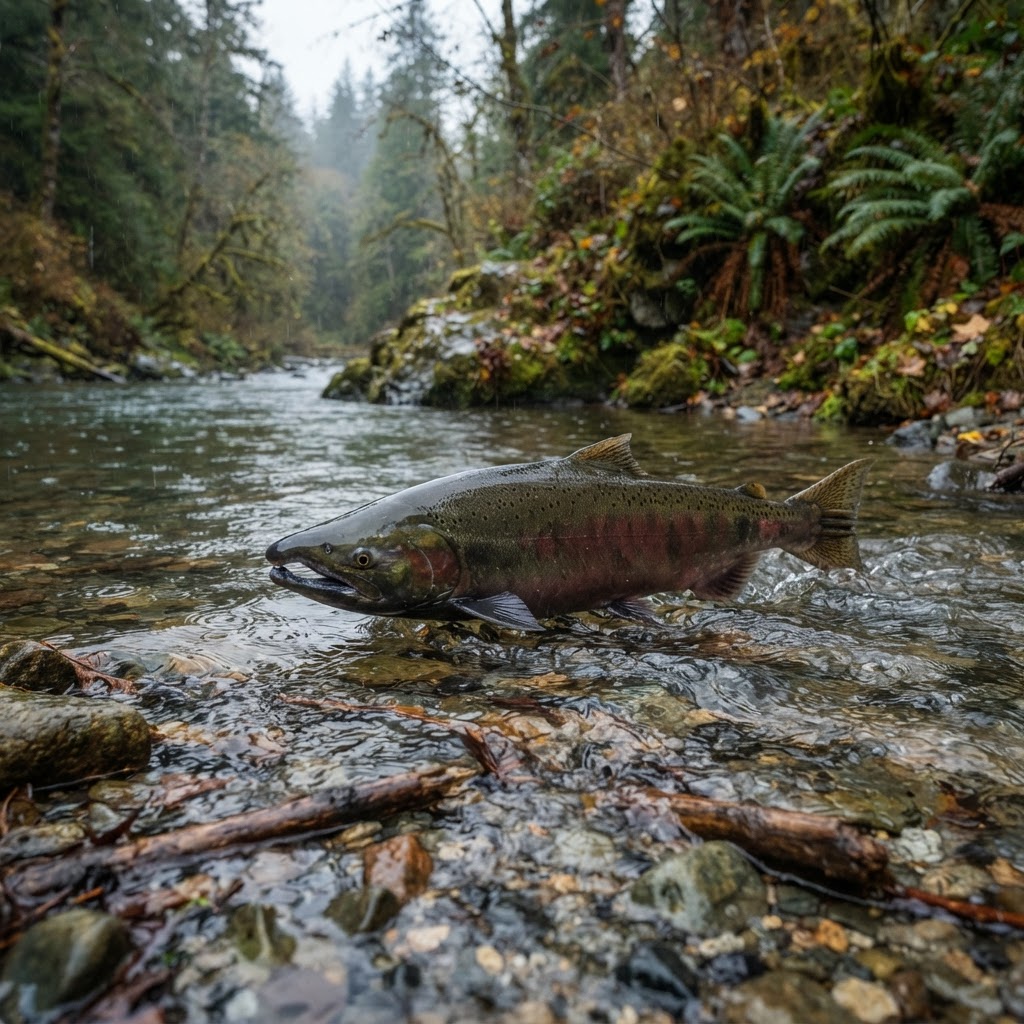
Oregon Salmon Fishing Regulations November 2026: End-of-Season Rules
Understanding Oregon Salmon Fishing Regulations for November 2026
If you are planning to hit the water this final week of November, you must be aware that several major Oregon river systems have regulatory changes taking effect on November 30 and December 1, 2026. The Oregon Department of Fish and Wildlife (ODFW) has implemented specific end-of-season closures for Chinook salmon across multiple coastal basins. Because these rules often supersede the printed 2026 Oregon Sport Fishing Regulations booklet, you should always verify the before heading out to ensure you are compliant with the latest temporary rules.
Get in the Community feed
Hunters and anglers nationwide posting bucks, catches, trail cam pics and what's working right now.


When you are out on the water this late in the season, keep a close eye on the specific boundary markers for each river. Many of these zones are defined by bridges, boat ramps, or specific river miles that are not always obvious from the bank. If you are fishing from a boat, ensure your GPS or map is calibrated to these exact landmarks, as enforcement officers strictly monitor these boundaries to protect spawning fish as they move into the upper reaches of the basins.
It is also vital to remember that the statewide bag limit for wild Chinook is two fish per day and twenty per season. This is separate from any individual river or basin limits you might see posted. If you reach your daily limit, you must stop targeting that species immediately. Experienced anglers often keep a physical log of their catch to ensure they do not accidentally exceed their seasonal allocation, as the state does not track your personal harvest in real time for you.
Northwest Zone Chinook Closures
For anglers targeting Chinook in the Northwest Zone, the season is rapidly closing. In the Necanicum River, Nehalem River, and Tillamook Bay tributaries—including the Wilson, Trask, and Kilchis rivers—the retention of all Chinook salmon is prohibited effective December 1, 2026. Through November 30, the daily adult wild Chinook bag limit remains one fish, with a seasonal limit of five. Once the calendar turns to December, you must cease targeting these fish entirely in these specific waters.

Youth Hunter Academy
Raise a safe, confident young hunter.
Safety missions for ages 5–17. Free parent account.
If you are looking for alternative opportunities, it is helpful to consult to see which salmonids remain open for harvest in your area. Always check the official ODFW regulation updates page before you launch your boat, as these dates are strictly enforced by state wildlife officials.
In the Nestucca and Three Rivers systems, the rules are particularly tight. You are limited to one adult wild Chinook per day in aggregate, with a seasonal cap of two fish. Once you hit that second fish, you are done for the year in those waters. Always check the ODFW regulation updates page before you head out, as these specific basin limits are designed to manage escapement goals that can shift based on the number of fish returning to the hatcheries.
For those fishing the Siletz, Yaquina, or Alsea rivers, the season remains open through December 31, 2026, with a seasonal limit of ten adult wild Chinook. However, the retention rules for these rivers are complex and change based on the specific river mile markers. You must be able to identify the exact location of the Ojalla Bridge or the Illahee boat ramp to know if you are in a zone where retention is currently permitted for that specific week.
Columbia River Fall Season Rules
On the mainstem Columbia River, the fall season remains active through December 31, 2026. However, the rules for what you can keep have shifted significantly. From Buoy 10 upstream to the Bonneville Dam, and from Bonneville Dam up to The Dalles Dam, all Chinook salmon must be released. You are permitted to retain hatchery coho and hatchery steelhead, with a daily adult bag limit of two fish.
When fishing the Columbia, remember that it is unlawful to fish in an area while in possession of fish that are not legal for that area. If you are unsure about your current location or the specific boundary markers, using a can help you stay within the legal zones. Upstream of The Dalles Dam to the Oregon/Washington border, all steelhead must be released through the end of the year.
When fishing the mainstem Columbia, remember that the rule allowing you to continue fishing until the boat limit is reached only applies if every angler on board is legally licensed and compliant. If you are fishing with a partner who has already reached their personal daily bag limit, you must stop fishing for that species immediately. It is a common mistake to keep lines in the water, but doing so while in possession of a full limit is a violation of state law.
Be aware that the Columbia River has specific control zones, such as the area near the mouth, where fishing for salmon is prohibited entirely. These zones are often marked on official maps provided by the ODFW. If you are unsure about the current status of a specific stretch of the river, check the e-regulations portal. The rules for hatchery coho and steelhead can also change rapidly, so verify the current status of the Bonneville Dam and The Dalles Dam zones before you launch.
Southwest and Central Zone Updates
In the Southwest Zone, the Chetco and Winchuck rivers recently saw their gear restrictions lifted following significant rainfall. Earlier in the season, these rivers were restricted to bobber and fly fishing to protect Chinook during low-flow conditions. With water levels now improved, standard gear is permitted, but you must still adhere to the basin-specific bag limits.
In the Central Zone, specifically the Umatilla River, the retention of fall Chinook was closed effective September 22 and remains closed through November 30. If you are fishing the Deschutes River, be aware that certain reaches remain closed to salmon and steelhead angling through December 31. Always check the for your specific river to see if recent weather patterns have impacted local fish movement or access.
In the Southwest Zone, the Sixes River remains open through December 31, 2026, with a seasonal limit of ten adult wild Chinook. If you are fishing the Hunter Creek area, the limit is much stricter at two fish for the season. Always verify your location against the ODFW maps, as the regulations for these smaller coastal streams are often distinct from the larger, more popular rivers nearby. These smaller systems are highly sensitive to water levels and can close on short notice.
For the Central Zone, specifically the Umatilla River, note that the closure for fall Chinook is absolute through November 30. If you are targeting hatchery steelhead in that same river, the season opens on November 13 and runs through April 30, 2027, with a daily limit of one fish. Because these dates overlap with salmon closures, you must be absolutely certain of your target species and the gear you are using to avoid accidental retention of a protected fish.
Essential Tips for Late-Season Angling
As water temperatures drop, salmon become more lethargic and often hold in deeper, slower pools. Adjusting your presentation is key to success during these final weeks. If you are struggling to get a bite, consider reviewing your terminal tackle in a to ensure you are using the most effective setup for cold-water conditions.
- Check for Updates: Always visit the ODFW website for the most current temporary rule filings.
- Identify Your Catch: Ensure you can distinguish between wild and hatchery fish, as many late-season rules require the release of wild stocks.
- Respect Closures: When a river closes to Chinook retention, it is often to protect spawning populations; avoid targeting them even for catch-and-release if the regulation specifies a total closure.
- Gear Up: Ensure your knots are fresh and your hooks are sharp, as late-season fish can be aggressive but easily spooked in clear, low-flow water.
For those who are new to these specific river systems, connecting with can provide valuable insights into current water conditions and local bite patterns. Remember that regulations can change on short notice due to environmental factors or escapement goals. If you are traveling to a different state, remember that rules vary significantly; for example, Washington and California have their own distinct salmon management plans that differ from Oregon's. Always consult the primary agency for the state you are visiting to avoid fines or accidental violations.
As the water clears and temperatures drop, your choice of leader material becomes critical. Many veteran anglers switch to a lighter fluorocarbon leader to reduce visibility in the low, clear water. If you are using a bobber setup, ensure your bait is hovering just off the bottom, as salmon in these conditions are often holding in the deepest, slowest parts of the pool. If you are not getting bites, adjust your depth by small increments until you find the strike zone.
Finally, always carry a valid, signed fishing license and any required tags on your person. If you are using a digital version, ensure your phone is charged and you have a backup plan in case of signal loss. State wildlife officials perform regular checks, and failing to produce a valid license or tag can result in significant fines. Check the ODFW website for the most recent fee schedule and to confirm if any new electronic reporting requirements have been implemented for your specific river.
Common questions
When does Chinook salmon season close in the Tillamook basin?
Chinook salmon retention in the Tillamook Bay and its tributaries closes effective December 1, 2026.
Can I keep Chinook salmon on the Columbia River in December?
No, all Chinook salmon must be released on the Columbia River from November 1 through December 31, 2026.
Where can I find the most current Oregon fishing regulation changes?
You should check the official ODFW regulation updates page on their website, as it lists temporary rules that supersede the printed 2026 regulation booklet.
Are gear restrictions still in place for the Chetco River?
No, ODFW lifted the gear restrictions on the Chetco and Winchuck rivers on November 13, 2026, due to increased water levels.
Fishing this season? to save your spots on the fishing map and keep a log of every catch.
Free every morning
Your Daily Briefing
One morning forecast for the spots you actually hunt and fish: deer movement, waterfowl flights, bite times, wind and shooting light.
See what's in itSet up your briefing
Join free, save a spot on the map, then pick what you hunt and fish and when you want your email.
Catch more these fish — free
Create a free account and unlock the full angling toolkit: