
NC Coastal Fish Harvest Reporting Requirements: What to Know
Understanding the New Reporting Enforcement
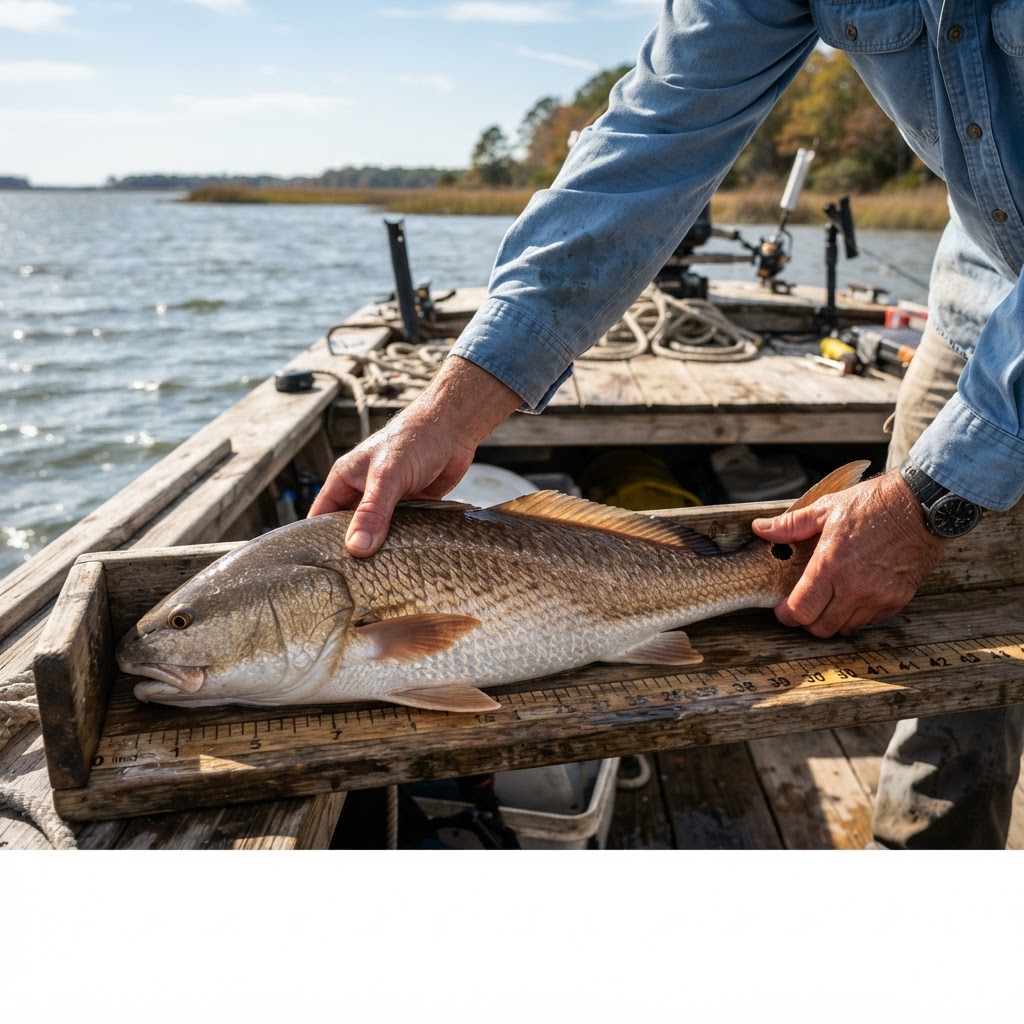
If you are planning to head out on the water in North Carolina, you need to be aware that the enforcement phase for mandatory harvest reporting is changing. As of December 1, 2026, the North Carolina Division of Marine Fisheries moves from issuing verbal warnings to issuing written warnings for anglers who fail to report their catch of specific species. This is a critical step in the state's phased-in approach to data collection, which will eventually lead to $35 fines plus court costs for non-compliance starting December 1, 2027. Understanding these is essential for any angler, but North Carolina's specific requirements for coastal species are now a permanent part of your post-trip routine.
Get in the Community feed
Hunters and anglers nationwide posting bucks, catches, trail cam pics and what's working right now.


Beyond the written warnings, you should know that Marine Patrol officers are actively checking for compliance at boat ramps and popular fishing piers. If you are stopped, they may ask to see your confirmation number on your device. It is wise to keep your phone charged and have a backup plan, such as a screenshot of the confirmation, in case you lose cellular service while out on the water or near remote coastal areas.
Which Species Require Reporting
The mandate applies only to fish that you keep. If you release your catch, you do not need to report it. However, if you harvest any of the following five species, you are legally required to submit a report:
- Flounder
- Red Drum
- Spotted Seatrout (speckled trout)
- Striped Bass
- Weakfish (gray trout)
Youth Hunter Academy
Raise a safe, confident young hunter.
Safety missions for ages 5–17. Free parent account.
These rules apply regardless of whether you are fishing in coastal, joint, or inland fishing waters that are adjacent to coastal or joint waters. If you are unsure about the specific boundaries of your fishing area, the state provides an interactive map to help you determine if your location falls under these requirements.
Keep in mind that you must not alter the appearance of these fish, such as removing the head or tail, until you have officially reported your harvest. This rule ensures that officers can accurately identify, count, and measure your catch if they inspect your cooler. If you are fishing with a group, remember that the responsibility to report falls on each individual angler, though you can report for minor children who are fishing alongside you.
How to Submit Your Harvest Report
The state has made the reporting process relatively straightforward, offering both digital and paper options. For most anglers, the digital route is the fastest way to stay compliant. You can access the online Mandatory Harvest Reporting webform via your smartphone, tablet, or computer. There is also an iPhone app available by searching for "NC DMF" in the Apple Store. Please note that an Android app is not yet available, so Android users should continue to use the webform.
If you do not have immediate access to a digital device, you can use a paper report card. These can be printed from the Division of Marine Fisheries website or picked up at any division office. If you use a paper card, you must still submit the information electronically by midnight on the day following your trip. If that deadline falls on a Sunday or a federal holiday, you have until midnight on the next business day to submit your data.
If you choose to use the paper report card, ensure you fill it out completely at the time your trip is finished. You must then submit that data electronically by the deadline. If you have technical trouble with the webform, you can contact the Division of Marine Fisheries at 252-515-5515 for assistance. Always verify that your submission went through by checking for a confirmation number, as this is your only official proof of compliance during an inspection.
When to Report Your Catch
Timing is everything when it comes to compliance. The law defines the completion of a fishing trip differently depending on how you are fishing:
- If you are on a boat: Your trip is considered complete the moment your vessel reaches the shore or a structure attached to the shore.
- If you are shore-based: Your trip is considered complete once you are no longer actively fishing and your gear is stowed away.
Reporting must occur immediately upon the completion of your trip. When you submit your report, you will receive a confirmation number. It is highly recommended that you save this number, either by taking a screenshot or having it sent to your email, as it serves as your proof of compliance if you are stopped by Marine Patrol.
For those who fish in inland waters that are adjacent to coastal or joint waters, the same reporting rules apply. You can find the specific boundaries for these areas on the interactive map provided by the state. If you are unsure if your favorite spot falls under these regulations, it is safer to report your catch anyway. The state publishes the most current list of regulated waterbodies and boundary definitions on their official website.
Information Required for Your Report
Whether you are using the online form or a paper card, the data points you need to provide remain the same. Having this information ready will make the process quick and painless:
- Identification: Your North Carolina fishing license number, or if you do not have one, your full name and the zip code of your primary residence.
- Date: The date the harvest occurred.
- Species and Count: The number of each of the five required species that you kept.
- Location: The major waterbody where the majority of your fish were harvested.
- Gear: The type of gear used, such as hook and line.
For those who are new to these waters, checking our can help you identify your catch correctly before you report it. Remember that you are not required to provide specific GPS coordinates or exact fishing spots; the state only requires the name of the major waterbody.
When entering your gear type, most recreational anglers will select hook and line. However, if you are using other legal methods like gigging, be sure to select the correct option on the form. Providing accurate gear information helps the state better understand how different methods impact fish populations. If you are reporting for multiple people, the form will ask for the total number of individuals included in your report to ensure the data remains precise.
Why This Data Matters
This reporting program was established by the North Carolina General Assembly through Session Law 2023-137. The goal is to gather more accurate data on recreational harvest, which helps the state manage these fisheries more effectively. While it may feel like an extra step at the end of a long day on the water, it is a necessary part of ensuring that these species remain available for future generations. If you are looking to improve your success rate while staying within the law, you might find our useful for planning your next outing.
The data you provide is used by biologists to monitor the health of these five specific species. By reporting your harvest, you are contributing to a larger effort to manage North Carolina's marine resources. If you notice that a species seems particularly abundant or scarce in your area, reporting your catch accurately helps the state track these trends over time. This information is vital for setting future size and bag limits that keep our fisheries sustainable for everyone.
Staying Compliant in Other States
It is worth noting that reporting requirements vary significantly from state to state. For example, while North Carolina has implemented this specific mandatory reporting system, other states like Florida or Texas have their own unique sets of rules regarding harvest reporting and tagging. Always check the local regulations before you travel. If you are planning a trip outside of North Carolina, ensure you are familiar with the local to avoid unnecessary fines or legal trouble.
If you frequently cross state lines to fish, do not assume that North Carolina's reporting system is the standard. Many neighboring states have different requirements, or none at all for recreational anglers. Always check the specific state wildlife agency website before you launch your boat. Using apps like FishRules can help you keep track of varying regulations, but always verify the information against the official state agency pages to ensure you are following the most recent legal requirements.
Final Tips for Anglers
- Don't wait: Make it a habit to report as soon as you dock or stow your gear. It takes only a few minutes.
- Keep your confirmation: Always keep your confirmation number handy on your phone until you are off the water and home.
- Check the map: If you are fishing near the boundary of inland and coastal waters, check the interactive map provided by the state to see if your specific location requires reporting.
- Stay updated: Regulations can change. Periodically check the official North Carolina Division of Marine Fisheries website for any updates to the reporting process or changes to the list of species.
By following these simple steps, you can ensure that you are doing your part to support sustainable fishing in North Carolina while keeping yourself in good standing with the law. For more tips on rigging and gear, feel free to explore our to ensure you are using the most effective setups for your target species.
If you are planning a long trip, consider bringing a portable power bank to keep your phone running until you reach the dock. If you are fishing in an area with poor reception, remember that you can record your harvest details on paper and submit them once you have a stable connection. Never leave the water without a clear plan for how you will submit your report, as the state is strictly enforcing these rules to protect our shared marine environment.
Common questions
Do I need to report fish that I catch and release?
No, the mandatory harvest reporting requirement only applies to fish that you keep and reduce to permanent possession.
What happens if I forget to report my catch?
Beginning December 1, 2026, you will receive a written warning for failing to report. Starting December 1, 2027, you may be subject to a $35 fine plus court costs.
How do I report my harvest if I don't have a smartphone?
You can print a paper report card from the North Carolina Division of Marine Fisheries website or pick one up at any division office. You must then submit the information electronically by midnight the following day.
Where can I find the online reporting form?
You can access the online form by visiting deq.nc.gov/report-my-fish or by scanning the QR codes found at many boat ramps and public access points.
Does this reporting requirement apply to inland waters?
Yes, it applies to coastal and joint fishing waters, as well as inland fishing waters that are adjacent to coastal or joint fishing waters.
Fishing this season? to save your spots on the fishing map and keep a log of every catch.
Free every morning
Your Daily Briefing
One morning forecast for the spots you actually hunt and fish: deer movement, waterfowl flights, bite times, wind and shooting light.
See what's in itSet up your briefing
Join free, save a spot on the map, then pick what you hunt and fish and when you want your email.
Catch more these fish — free
Create a free account and unlock the full angling toolkit: