
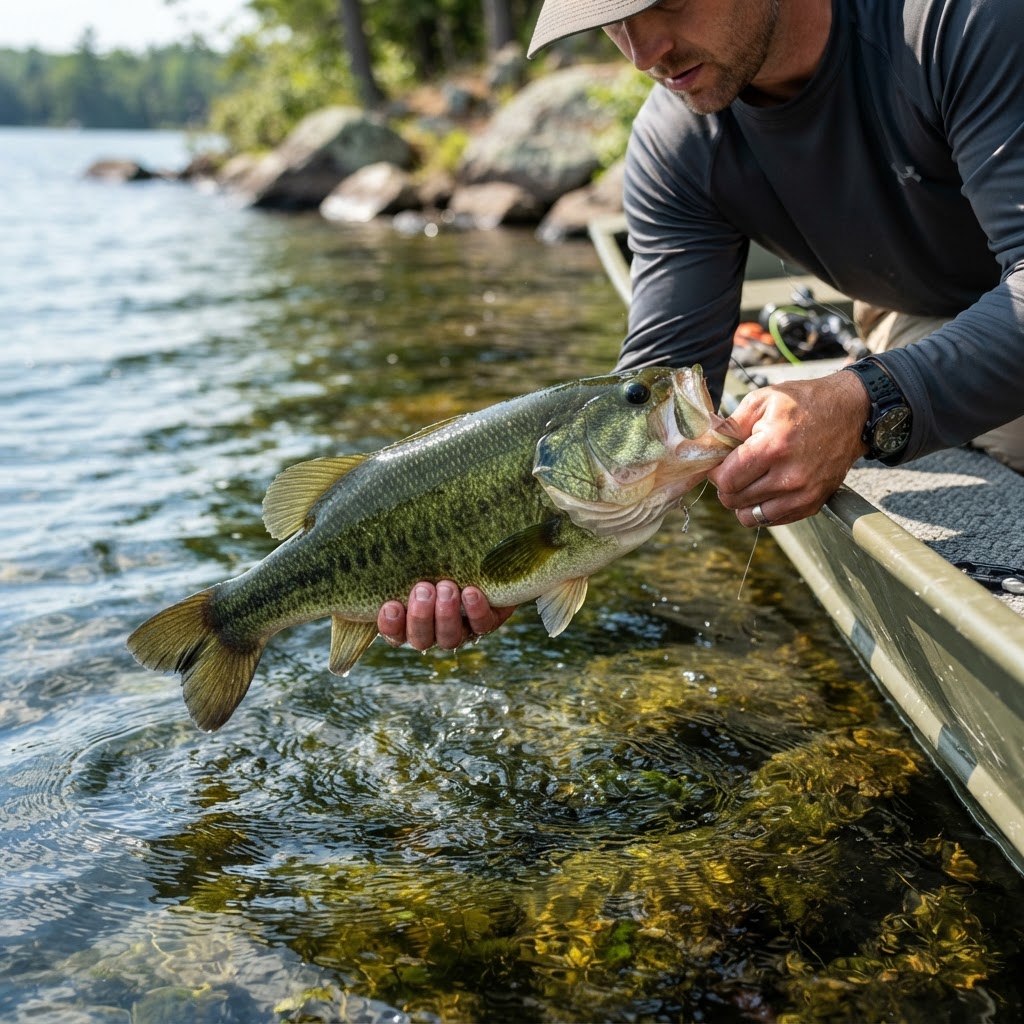
Mastering Largemouth Bass: The Ultimate Guide for North American Anglers
The Iconic Largemouth Bass: An American Sport Fishing Staple
For millions of anglers across the United States, the Largemouth Bass (Micropterus salmoides) is the gold standard of freshwater fishing. Whether you are fishing a small farm pond in the heartland or a massive reservoir in the South, these aggressive predators provide a thrill that few other species can match. At Buckeye Hunter Hub, we believe that understanding the biology and behavior of the largemouth is the first step toward consistency on the water.
Get in the Community feed
Hunters and anglers nationwide posting bucks, catches, trail cam pics and what's working right now.


Biology and Behavior: Knowing Your Quarry
Largemouth bass are ambush predators. They possess a large, upturned mouth designed to inhale prey—ranging from insects and crawfish to small bluegill and even ducklings—in a single gulp. They are highly adaptive fish that can thrive in a variety of environments, though they generally prefer clear to stained water with ample structure.
Unlike schooling fish, largemouth bass are often solitary hunters once they reach maturity. They are extremely territorial and will defend prime real estate, such as a submerged log or a rocky point, against intruders. To plan your next outing, check our to identify local hotspots that hold these ambush points.
Preferred Habitat and Environmental Factors
Raise a safe, confident young hunter.
Guide your kids ages 5–17 through interactive hunting safety missions, real decision drills, and earned trophies — all from one free parent account.




Largemouth bass are creatures of comfort. They are ectothermic, meaning their body temperature is regulated by the water around them. In the spring and autumn, you will often find them in the shallows where the water warms quickly. During the heat of summer or the deep freeze of winter, they move to deeper, more stable environments like main-lake drop-offs or deep creek channels.
Always ensure you are following local regulations by checking before heading out. State agencies like the Florida Fish and Wildlife Conservation Commission provide essential data on lake health and stocking programs that directly impact your catch rates.
Effective Techniques and Gear
To become a versatile angler, you must master a variety of techniques. Beginners should start with a spinning setup rigged with a Texas-rigged plastic worm, which is perhaps the most effective lure for bass ever invented.
For more advanced anglers, the focus often shifts to precision. Power fishing—using crankbaits and spinnerbaits—allows you to cover water quickly, while finesse techniques like the Drop Shot or Ned Rig are essential when the bite gets tough or the water is heavily pressured. If you want to refine your skills, be sure to browse for deep-dives into seasonal lure selection and gear tuning.
Seasonal Strategies: A Year-Round Approach
- Spring (Pre-Spawn to Spawn): This is the "Big Bass" window. As water temperatures climb into the 55-65 degree range, fish move toward shallow spawning flats. Use lipless crankbaits or chatterbaits to trigger reaction strikes from females preparing to lay eggs.
- Summer: The sun is high, and so is the fish's metabolism. Target shade—docks, overhanging trees, and thick lily pads. Frogging in the vegetation early in the morning or late in the evening can produce explosive topwater bites.
- Autumn: Bass begin feeding heavily to prepare for winter. Look for baitfish activity in the backs of creeks. This is the time of year to burn spinnerbaits and topwater lures across the surface.
- Winter: Patience is key. Move slow and use jigs or spoons to target lethargic fish sitting on deep structural breaks.
Tips for Success: From Beginner to Pro
- Focus on Structure: Bass love "edge" environments. The intersection of hard and soft bottom, or the line where weeds meet open water, is a prime feeding station.
- Match the Hatch: If the lake is full of shad, use silver or white lures. If the water is dark and muddy, switch to darker colors like black and blue to provide a better silhouette.
- Stay Stealthy: Large bass can be spooked easily, especially in clear water. Use fluorocarbon line to keep your presentation invisible, and try to keep noise in the boat to a minimum when fishing the shallows.
- Log Your Catches: Success in bass fishing is cumulative. Keeping a journal or using apps to track what worked during specific weather conditions will help you build a mental database of success.
Conclusion
Targeting largemouth bass is a lifelong pursuit that rewards patience, observation, and a willingness to learn. By understanding the seasonal movements of these fish and refining your technique, you will find yourself hooked on this sport for years to come. Remember, the best part of the sport is the shared experience, so don't forget to document your success and share your story with the community. We always love seeing what our readers are pulling out of the water!
Catch more these fish — free
Create a free account and unlock the full angling toolkit: