
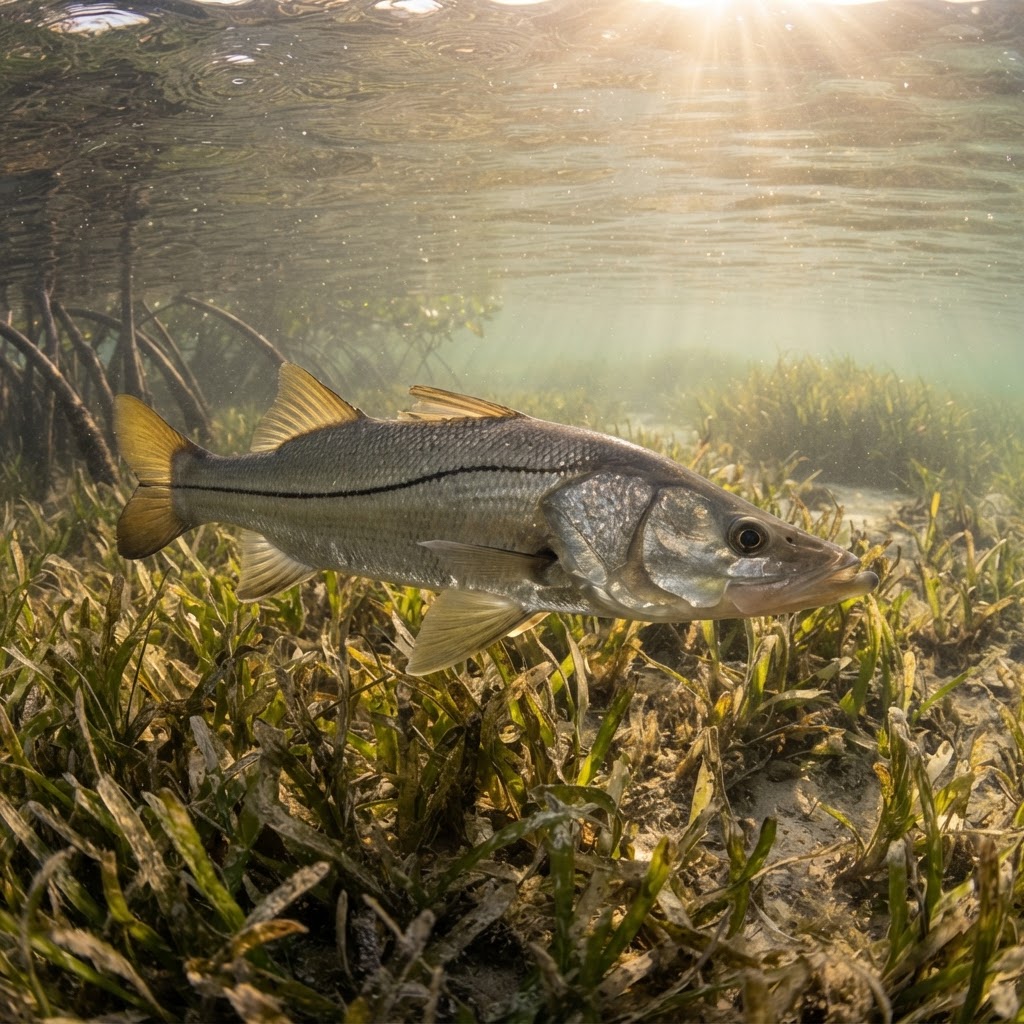
Florida Snook Winter Season Closure 2026: Regional Harvest Rules
Understanding the 2026 Winter Snook Closures
For anglers planning their final trips of the year, the most important detail is that the Florida Fish and Wildlife Conservation Commission (FWC) manages snook through a regional system with specific harvest windows. As of today, November 28, 2026, the harvest season remains open across all nine management regions. However, the calendar is about to shift. On December 1, the recreational harvest of snook will close for all west coast management regions, including the Panhandle, Big Bend, Tampa Bay, Sarasota Bay, Charlotte Harbor, and the Southwest region. If you are fishing on the east coast, you have a slightly longer window; the harvest season for the Southeast, Indian River Lagoon, and Northeast regions remains open until December 15.
Get in the Community feed
Hunters and anglers nationwide posting bucks, catches, trail cam pics and what's working right now.


These closures are part of a holistic management approach that uses regional metrics to ensure the long-term health of the fishery. When a region is closed to harvest, you may still target snook using catch-and-release methods, but you cannot legally retain any fish. Because regulations can change based on annual reviews, it is always a good practice to check the before you head to the ramp.
When the season closes, you must transition your focus to handling techniques that prioritize fish survival. During these colder months, snook often congregate in deeper canals or near thermal refuges like power plant discharges. If you hook one, keep the fight as short as possible to prevent exhaustion. Use heavy enough leader material to land the fish quickly, and always support the belly when lifting them for a photo. Avoid dragging them across dry surfaces or holding them vertically by the jaw.
If you are fishing in areas with high current, be mindful of the water temperature. Snook are sensitive to rapid drops, and a fish that is already stressed by cold water is less likely to recover if handled poorly. Keep your hands wet before touching the fish to protect their slime coat. If you must use a landing net, choose a rubberized, knotless mesh to minimize scale damage. These small adjustments ensure the population remains healthy for the next open harvest window.
West Coast Regional Harvest Rules

Youth Hunter Academy
Raise a safe, confident young hunter.
Safety missions for ages 5–17. Free parent account.
If you are fishing the Gulf side of the state, the December 1 closure is a hard deadline. This applies to the Panhandle, Big Bend, Tampa Bay, and Sarasota Bay regions, where the season will remain closed through the end of February. For the Charlotte Harbor and Southwest regions, the closure also begins on December 1, but these areas have slightly different summer closure dates.
In all these west coast regions, the current slot limit for harvest is 28 to 33 inches in total length, with a bag limit of one fish per person per day. Once the clock strikes midnight on December 1, these fish must be returned to the water immediately. If you are looking for tips on how to handle these fish safely during the colder months, our provide essential information on proper catch-and-release techniques to ensure the fish survives the encounter.
For those targeting the Charlotte Harbor and Southwest regions, remember that your summer closure extends through September 30, which is a month longer than the regions further north. This distinction is vital when planning your late-summer trips. Always measure your catch using a flat measuring board rather than a flexible tape, as the FWC requires the measurement to be the total length from the most forward point of the head to the furthest tip of the tail with the tail compressed or squeezed.
When you are out on the water, keep in mind that the regional boundaries are defined by specific geographic markers like latitude lines or road crossings. For instance, the boundary between the Charlotte Harbor and Southwest regions is near Vanderbilt Beach Road in Collier County. If you are fishing near these lines, use a GPS or a detailed map to confirm your exact position. Being just a few hundred yards into the wrong zone can lead to a citation if you are in possession of a fish.
East Coast Regional Harvest Rules
Anglers on the Atlantic side of Florida have until December 15 to harvest snook. This applies to the Southeast, Indian River Lagoon, and Northeast regions. Unlike the west coast, the slot limit for these regions is 28 to 32 inches in total length. The bag limit remains one fish per person per day.
Once the December 15 closure takes effect, these regions will remain closed to harvest through January 31. It is worth noting that the boundaries for these regions are specific. For example, the Southeast region includes the Loxahatchee River and various canals, but it excludes Lake Okeechobee and Everglades National Park. Always verify your specific location against the official FWC regional maps to ensure you are not accidentally fishing in a restricted zone or a different management area. If you are unsure about the specific boundaries of your local water, a can help you visualize these management zones.
The Southeast region has unique boundaries that include the Loxahatchee River and various canals, but it specifically excludes Lake Okeechobee and Everglades National Park. If you are fishing in the Everglades, be aware that the regulations there may differ from the surrounding coastal waters. Always check the FWC website for special management area rules before you launch. The complexity of these boundaries means that local knowledge of the exact water body you are fishing is just as important as your tackle selection.
In the Northeast region, the boundary ends at the Lytle Avenue or South Causeway in New Smyrna Beach. North of this point, the regulations for other species may apply, but snook management is strictly regional. If you are fishing the St. Johns River, remember that its tributaries are included in the Northeast region. Because these regions are managed based on specific biological metrics, the FWC may adjust boundaries or dates in the future, so verify your location on the official FWC map every single season.
Essential Compliance and Gear Requirements
Regardless of the season, compliance is non-negotiable. To harvest snook in Florida, you must possess a valid recreational saltwater fishing license and a snook permit, unless you fall under a specific exemption. The FWC is clear that permit sales are final, even if the season is closed in the area where you intended to fish.
When you are on the water, remember these standard rules:
- Snook must remain in whole condition until you are landed ashore.
- The use of snatch hooks or spearing is strictly prohibited.
- Only hook-and-line gear is permitted for recreational harvest.
- Captains and crew on for-hire vessels are not permitted to retain a bag limit.
If you are preparing your tackle for the final days of the open season, ensure your terminal tackle is up to the task. Using the right setup can reduce fight times, which is critical for the health of the fish. You can find recommendations for effective setups in our and learn how to tie the most reliable connections in our .
Beyond the basic license and snook permit, ensure you are familiar with the specific gear restrictions. The rule against snatch hooks is strictly enforced, as is the prohibition on spearing. If you are using live bait, circle hooks are highly recommended to prevent gut-hooking, which significantly increases mortality rates. Even if you are not keeping the fish, using the right hook type is a mark of a responsible angler who understands the importance of catch-and-release ethics during the closed season.
If you are fishing from a vessel, remember that the snook must remain in whole condition until you are landed ashore. This means you cannot fillet the fish or remove the head and tail while on the water. This regulation allows law enforcement to verify the length of the fish against the slot limit. If you are checked by an officer, have your license, permit, and measuring device ready. Keeping your documentation organized makes the process smoother for both you and the officer.
Staying Informed on Regional Changes
Florida’s inshore fisheries are dynamic, and the FWC frequently updates its management approach based on environmental conditions and population data. While the dates provided here are current as of November 2026, you should always confirm the status of your specific region on the official FWC snook page.
If you are planning a trip for early 2027, keep in mind that the reopening dates vary by region. For instance, the east coast regions are scheduled to reopen for harvest on February 1, while the west coast regions generally remain closed through the end of February. Keeping track of these dates is part of being a responsible angler. For those who want to stay ahead of the curve, checking the can help you plan your trips around the best bite windows while staying within the legal harvest seasons.
The FWC publishes all current fees, including the $10 annual snook permit and the $13.50 annual resident saltwater fishing license, on their official website. If you are a non-resident, be aware that your license options include 3-day and 7-day permits, which can be more cost-effective for short trips. Always purchase these through the official state portal to avoid third-party service fees. Remember that all permit sales are final, so confirm the season status for your target region before you complete your transaction.
For those who fish frequently, consider the five-year license options if you are a resident, as they provide long-term savings. If you are 65 or older, you may be exempt from certain licensing requirements, but you must carry proof of age and residency. Always check the FWC website for the most recent updates on exemptions and fees, as these can change. Staying updated on these administrative details is just as important as knowing the bite windows and the current regional harvest status.
Common questions
When does snook season close in Florida for 2026?
The season closes on December 1 for all west coast regions and on December 15 for all east coast regions.
Can I keep snook in Florida after the harvest season closes?
No, you cannot retain snook during the closed season. You may continue to fish for them using catch-and-release methods, but all fish must be returned to the water immediately.
What is the slot limit for snook in Florida?
On the west coast, the slot limit is 28 to 33 inches total length. On the east coast, the slot limit is 28 to 32 inches total length.
Do I need a special permit to fish for snook in Florida?
Yes, you must have a valid recreational saltwater fishing license and a snook permit to take or attempt to take snook, unless you are exempt.
Fishing this season? to save your spots on the fishing map and keep a log of every catch.
Free every morning
Your Daily Briefing
One morning forecast for the spots you actually hunt and fish: deer movement, waterfowl flights, bite times, wind and shooting light.
See what's in itSet up your briefing
Join free, save a spot on the map, then pick what you hunt and fish and when you want your email.
Catch more these fish — free
Create a free account and unlock the full angling toolkit: