
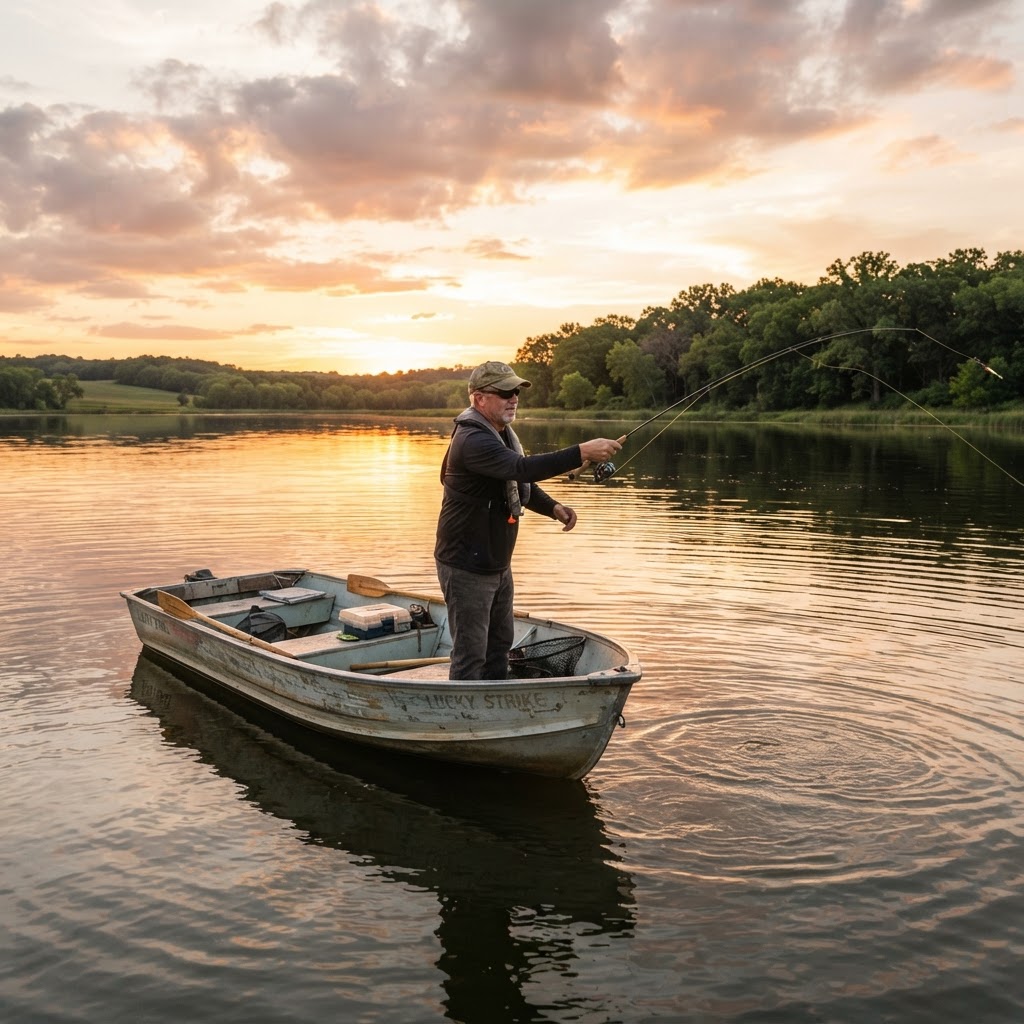
Corn Belt Angling: Navigating Iowa’s Inland Fisheries
Discovering Iowa's Aquatic Frontier
When many anglers think of the Midwest, their minds often drift toward the Great Lakes or the famous rivers of the deep south. However, tucked away in the heart of the Corn Belt, Iowa offers a surprisingly diverse array of fisheries that cater to everything from fly-fishing purists to big-river trophy hunters. At Buckeye Hunter Hub, we believe that understanding the geography and seasonal metabolism of these inland waters is key to success. Whether you are chasing walleye on the Great Lakes of Iowa or seeking out smallmouth bass in the state’s winding creeks, Iowa provides a robust landscape for the dedicated angler.
Get in the Community feed
Hunters and anglers nationwide posting bucks, catches, trail cam pics and what's working right now.


The Premier Species: Walleye, Bass, and More
Iowa is perhaps best known for its world-class walleye fishing. The natural lakes of the Iowa Great Lakes region—specifically West Okoboji and Spirit Lake—offer some of the most consistent walleye action in the country. During the spring spawn, these fish congregate near rocky shorelines and current breaks. If you find yourself struggling to locate schools, our can help you identify structural nuances like drop-offs and rocky humps where these fish tend to hold.
In addition to walleye, the state boasts exceptional populations of largemouth and smallmouth bass. While largemouths dominate the state-managed lakes and farm ponds, smallmouths provide an exhilarating fight in the upper reaches of the Cedar, Des Moines, and Wapsipinicon Rivers. For those targeting larger, more elusive game, blue catfish have become an increasingly popular target in the Mississippi and Missouri River channels, where specimens regularly exceed the 50-pound mark.
Navigating Seasonal Shifts

Youth Hunter Academy
Raise a safe, confident young hunter.
Safety missions for ages 5–17. Free parent account.
Fishing in Iowa is heavily dictated by the state’s dramatic four-season climate. As the ice retreats in early spring, the pre-spawn period marks the best time to target walleye and northern pike. Anglers should focus on shallow, warming water adjacent to spawning grounds. As summer settles in, the heat can drive fish to deeper, cooler thermal refuges. During these dog days, we recommend consulting provided by the Iowa Department of Natural Resources to stay updated on water temperature trends and specific lake stocking reports.
Autumn provides perhaps the most stable fishing of the year. As water temperatures drop into the 50s, predatory fish like bass and crappie enter a heavy feeding phase to pack on weight before winter. This is the ideal time to experiment with faster-moving baits like crankbaits or spinnerbaits. When you finally land that personal best during these transition periods, be sure to share your success on our to inspire fellow anglers.
Public Access and Regional Hotspots
Access is rarely an issue in Iowa, provided you know where to look. The state maintains an extensive system of public access areas, boat ramps, and fishing piers. For the river angler, the Iowa DNR’s official website at https://www.iowadnr.gov offers comprehensive maps of public river corridors. If you are a fan of quiet, wade-able water, explore the Trout Streams of Northeast Iowa. This unique driftless area features spring-fed, cold-water streams that feel worlds apart from the surrounding cornfields. Fishing here requires a different set of tactics—think lighter fluorocarbon leaders, smaller nymphs, and stealthy presentations.
Gear and Regulations: The Angler’s Checklist
Success in Iowa requires balancing utility with precision. For river smallmouth, a medium-light spinning setup spooled with 8lb test line is sufficient. When tackling the heavy currents of the Missouri River for catfish, you will need heavy-duty rods, high-capacity reels, and circle hooks paired with fresh cut bait.
Before you hit the water, always ensure your license is current. Iowa’s regulations regarding slot limits, bag limits, and gear restrictions can vary significantly between the Great Lakes and the smaller, inland reservoirs. Always keep a digital or physical copy of the current Iowa Fishing Regulations handbook readily available in your tackle box. For more in-depth techniques on how to properly interpret underwater sonar or adjust your tackle for specific depths, continue reading through to refine your tactical approach.
Final Thoughts on Iowa’s Potential
Iowa is an underrated gem that rewards the curious and observant angler. It is not just about the size of the catch, but the beauty of the landscape and the accessibility of the resource. By keeping a log of your own successes and failures, you can turn any local pond into a reliable honey hole. Take the time to understand the forage base, track the barometric pressure, and respect the water, and you will find that the Hawkeye State has plenty to offer all year round.
Free every morning
Your Daily Briefing
One morning forecast for the spots you actually hunt and fish: deer movement, waterfowl flights, bite times, wind and shooting light.
See what's in itSet up your briefing
Join free, save a spot on the map, then pick what you hunt and fish and when you want your email.
Catch more these fish — free
Create a free account and unlock the full angling toolkit: