
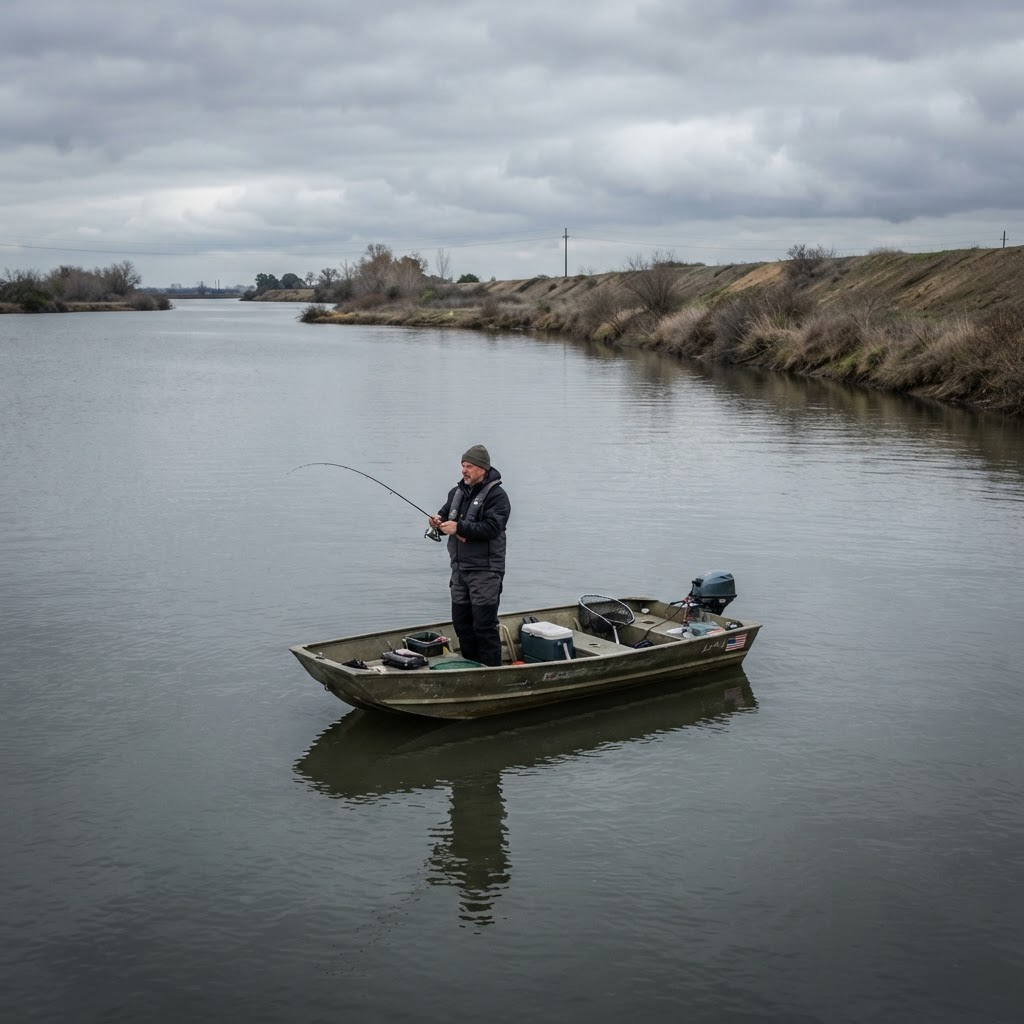
California Delta Striped Bass Fishing: Winter Tactics
Winter Striped Bass Behavior in the Delta
As of late November 2026, water temperatures in the California Delta are dropping rapidly, typically hovering between 58°F and 60°F. As these temperatures continue to slide toward the 50°F to 55°F range, striped bass metabolism slows significantly. You will notice the aggressive, surface-feeding behavior common in October and early November begin to vanish. The fish are not gone, but they are no longer roaming the flats to hunt. Instead, they become increasingly lethargic and move toward deeper, more stable water where they can conserve energy.
Get in the Community feed
Hunters and anglers nationwide posting bucks, catches, trail cam pics and what's working right now.


During this transition, you should shift your focus from searching for surface boils to methodically working deeper holes, channel edges, and riprap banks. While the California Department of Fish and Wildlife notes that winter fishing can be generally poor compared to the spring spawning run, persistent anglers can still find success by targeting these specific wintering zones. If you are planning your next outing, checking a can help you identify the best weather windows, as cold fronts often shut down the bite entirely for several days.
When the water temperature dips below 55 degrees, you should pay close attention to the barometric pressure. A rapidly falling barometer often signals an incoming storm, which can cause the fish to stop feeding entirely. Conversely, clear bluebird days after a front can be equally difficult because the bright sunlight pushes the fish into the deepest, darkest pockets of the sloughs. You will find that your success depends heavily on your ability to read these subtle atmospheric shifts throughout the day.
Another factor to consider is the clarity of the water. Winter rains can introduce significant runoff, turning the Delta into a muddy mess that makes it hard for stripers to locate your bait. If you find the main channels are blown out, look for areas where the water remains relatively clear, such as near the farmer pumps that drain fields. These pumps often create small, localized currents that attract baitfish and, consequently, the striped bass looking for an easy meal.
Where to Find Stripers in Cold Water

Youth Hunter Academy
Raise a safe, confident young hunter.
Safety missions for ages 5–17. Free parent account.
When the water cools, look for areas that provide thermal stability or access to deep-water sanctuaries. The West Delta, specifically the stretch from Antioch to Benicia, remains a primary corridor for fish moving between the bay and the river systems. Liberty Island has also been known to hold schools of larger fish during the early winter months.
If the main river channels become too slow, move into the sloughs and secondary channels. Franks Tract and the Mokelumne River are reliable backup areas when the main river bite stalls. Focus your efforts on:
- Outside bends where the current is slightly softer.
- Deep slots adjacent to shallow flats.
- Levee points and confluence mouths that concentrate baitfish.
- Riprap banks that absorb heat during the day and provide crawfish forage.
Beyond the main channels, do not overlook the influence of the large water pumps located on the Old River near Tracy. These pumps move massive volumes of water and create artificial currents that can concentrate fish even when the rest of the system feels stagnant. You should monitor the flow rates if possible, as the movement of water is often the primary trigger for a winter bite. Always keep your boat positioned to take advantage of these man-made current breaks.
When you are scanning the bottom with your electronics, look for subtle changes in the depth contour rather than just massive schools of fish. In the winter, stripers often hold as solitary individuals or in very small groups tucked tight against the bottom. If you see a slight indentation or a small rock pile on your sonar, drop your bait right on top of it. These tiny pieces of structure are often the difference between a productive day and going home empty-handed.
Lure Selection and Bait Tactics
Because the fish are less willing to chase fast-moving lures, you must adjust your retrieve speed. Hard jerkbaits worked with long, deliberate pauses are highly effective around rocky structure. If you prefer soft plastics, 4-inch to 5-inch swimbaits on a jighead or used as a chatterbait trailer remain the go-to choice for many local anglers.
For those who prefer bait fishing, threadfin shad are the most common forage in the Delta. When using shad, hook them through the split and fold them with the flesh side out to increase scent dispersion. Other effective baits include sardines, anchovies, bloodworms, and pile worms. Because tidal currents in the Delta are strong, you must carry a wide assortment of sinkers to ensure your bait stays on the bottom regardless of the tide stage. If you are unsure about how to set up your terminal tackle for these conditions, consult a to ensure your knots and leaders are up to the task.
When you are using live bait like threadfin shad, the way you hook them is vital for winter success. Because the fish are lethargic, they will often inspect a bait before committing. Ensure your bait is lively and presented naturally. If you are using cut bait, keep your pieces small and fresh. The scent is the primary attractant in cold water, so changing your bait frequently to ensure it is bleeding scent into the water column is a necessary habit for any serious angler.
Regarding your terminal tackle, the strength of the Delta tides requires you to be prepared for constant adjustments. You might start the morning needing a one-ounce sinker, but as the tide peaks, you may need to switch to three ounces or more to maintain contact with the bottom. Never let your line bow excessively in the current, as this will prevent you from feeling the light, tentative taps that characterize a winter striper bite. Keep your rod tip low and your line tight.
Understanding Regulations and Measurements
California striped bass regulations are governed by Title 14 of the California Code of Regulations. For inland waters, including the Delta and the Sacramento and San Joaquin systems, the season is open all year, with a daily bag limit of two fish and a minimum size of 18 inches.
It is critical to measure your fish correctly, as the state defines total length as the longest straight-line measurement from the tip of the head to the end of the longest lobe of the tail. This is not fork length, and the difference can be enough to turn a legal fish into a violation. Always verify the specific regulations for the exact stretch of water you are fishing, as some river segments may have closures to protect spawning salmon or steelhead. You can find detailed to ensure you remain compliant throughout the season.
Before you head out, ensure you have your valid California sport fishing license on your person, as the state requires it for anyone 16 or older. For the 2026 season, the resident annual license is $55.05, while a nonresident annual license is $142.05. If you lose your license, you can obtain a duplicate through the California Department of Fish and Wildlife online portal or at a licensed agent. Always keep your license accessible, as wardens frequently check anglers in the Delta.
Be aware that while there is no report card required for striped bass, other species you might encounter, such as sturgeon, do require one. If you are targeting sturgeon, you must have the $8.13 report card in your possession before you start fishing. Furthermore, keep in mind the health advisories from the Office of Environmental Health Hazard Assessment regarding consumption. Men 18 and older and women 50 and older should limit their intake to one serving per week, while others should avoid consumption entirely.
Tactical Adjustments for Winter Success
- Tide Awareness: Moving water almost always outproduces slack water. Plan your trip around the tide, and be prepared to re-rig your weight when the current strength changes to keep your presentation in the strike zone.
- Patience: Winter fishing is a game of attrition. You may find excellent action one day and struggle the next. If you are not getting bites, do not be afraid to move to a different section of the river or a different slough.
- Structure: Use your electronics to find fish holding near the bottom. Even if you do not see surface activity, the fish are likely there, just holding tight to the structure.
For more information on specific species, you can browse our to learn more about the life cycle and seasonal habits of striped bass. Remember that while the bite is slower, the fish you do catch in the winter are often in excellent condition. By slowing your presentation and focusing on the deeper, more stable areas of the Delta, you can maintain consistent success even as the temperatures drop.
One final tip for the winter season is to manage your expectations regarding the number of bites you will receive. This is not the time for high-volume fishing. You might only get one or two opportunities all day, so your focus must be on execution. When you do feel that telltale weight on the end of your line, do not rush the hook set. Give the fish a second to fully take the bait before you apply pressure to ensure a solid connection.
Finally, remember that the gear you use should be appropriate for the conditions. A sensitive rod that allows you to feel the bottom and the subtle movements of the fish is essential. If you are using a boat, ensure your trolling motor is capable of holding you in position against the wind and tide. A steady, controlled presentation is the hallmark of a successful winter angler, and patience will ultimately be your most valuable tool when the water temperatures are at their lowest.
Common questions
Is striped bass fishing open in the California Delta during winter?
Yes, striped bass fishing in the California Delta is open all year. However, you must always check for specific local closures on the exact stretch of water you plan to fish.
What is the best bait for winter striped bass in the Delta?
Threadfin shad are the most effective bait, often fished by hooking them through the split and folding them flesh-side out. Sardines, anchovies, and pile worms are also popular alternatives.
How do I measure a striped bass in California?
California requires you to measure the total length, which is the longest straight-line distance from the tip of the head to the end of the longest lobe of the tail.
Why is the striped bass bite slower in the winter?
As water temperatures drop, the metabolism of striped bass slows down, causing them to become less active and less willing to chase fast-moving prey.
Fishing this season? to save your spots on the fishing map and keep a log of every catch.
Free every morning
Your Daily Briefing
One morning forecast for the spots you actually hunt and fish: deer movement, waterfowl flights, bite times, wind and shooting light.
See what's in itSet up your briefing
Join free, save a spot on the map, then pick what you hunt and fish and when you want your email.
Catch more these fish — free
Create a free account and unlock the full angling toolkit: